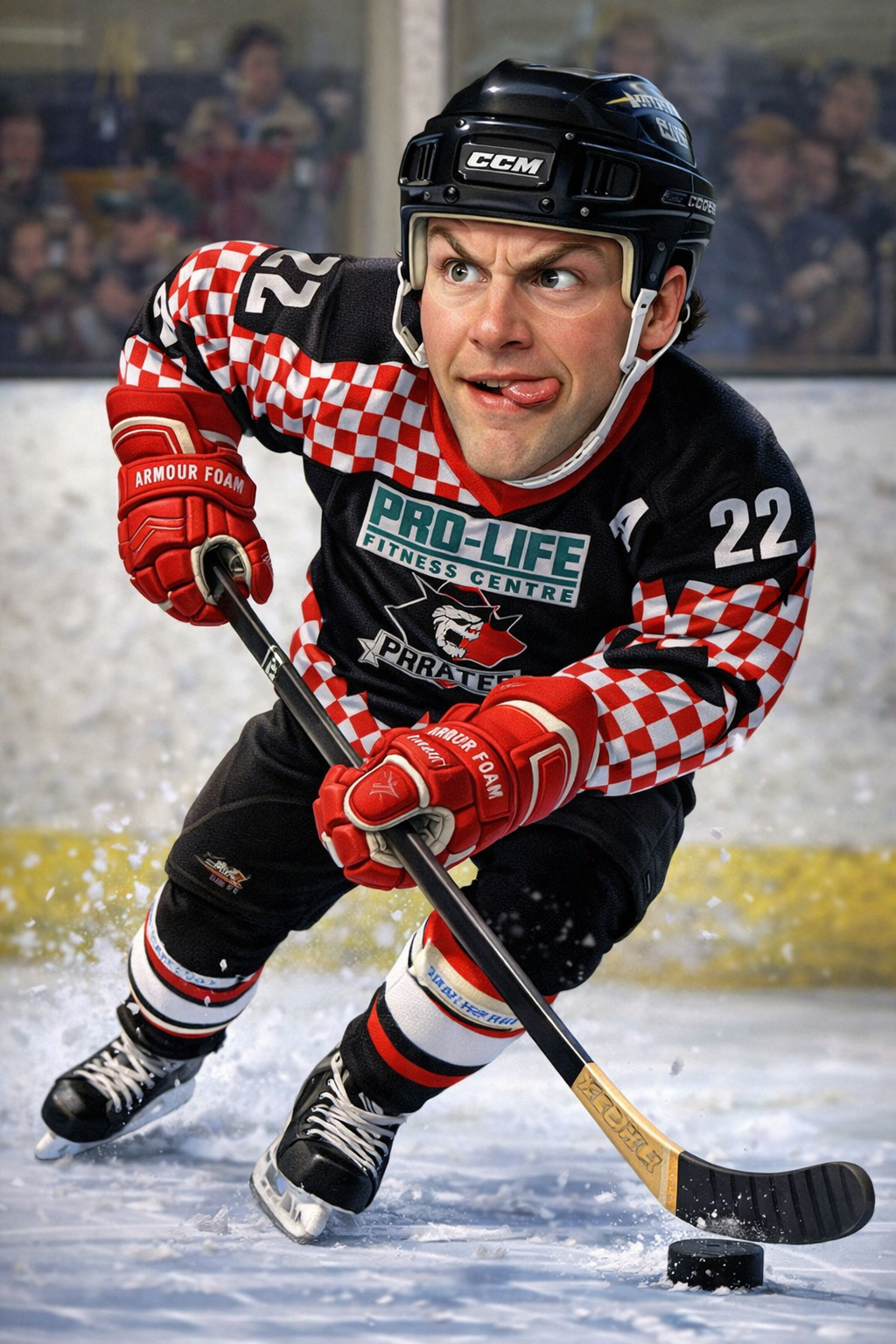
John Kidd: Tough as Nails in the Glory Days of Scottish Hockey
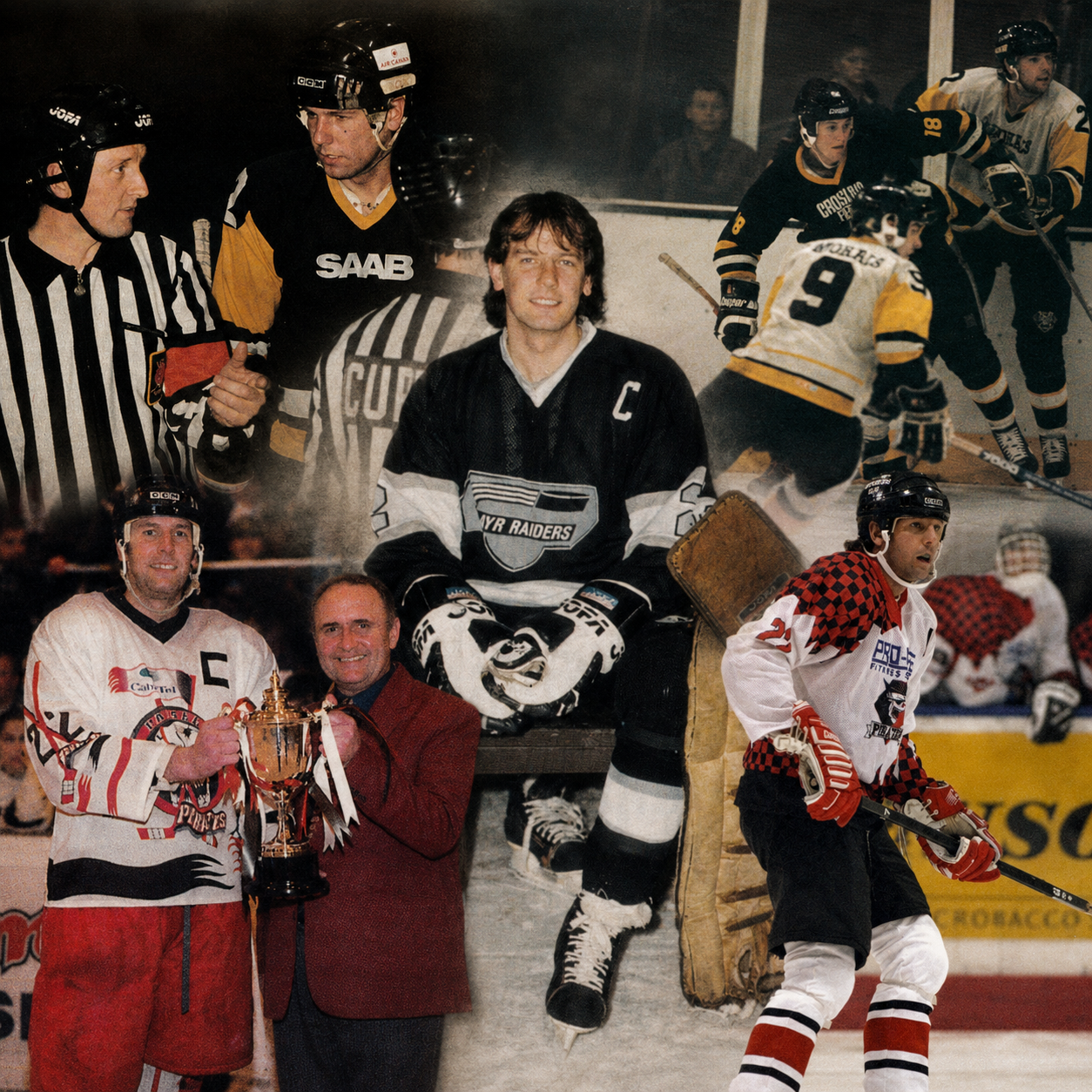
John Kidd: Tough as Nails in the Glory Days of Scottish Hockey
There are some players from the old British hockey days whose stats alone can never truly define. John Kidd was one of them.
Hard-nosed, fiercely loyal, and impossible to move from in front of the net, Kidd became one of the most respected British forwards of the 1980s and 90s — a player who gave everything for every badge he wore.
Raised in Ayr, Kidd’s hockey story began not in a gleaming modern arena, but on the tiny ice pad at Limekiln Road — affectionately known as “the wee ice.” The facilities were primitive even by the standards of the time. There was no Zamboni, training time was limited, and players often had to scrape the ice by hand after sessions. Yet out of those conditions emerged some of Scotland’s toughest and most determined hockey players.
By the age of 17, Kidd had broken into the Ayr Bruins first team during the 1980-81 season. Alongside a group of local youngsters, he learned the game the hard way — long bus journeys to hostile away rinks like Durham, Billingham and Whitley Bay, often travelling for hours just to play in intimidating old-school arenas packed with passionate fans.
As the Heineken League era exploded in popularity during the mid-1980s, Ayr found themselves trying to compete with bigger clubs despite their tiny rink and limited resources. The arrival of quality imports like Paul Widard, Derek Watt and Kevin Murphy transformed the Bruins into genuine contenders. Wembley dreams suddenly became reality.
Then came the ambitious promise that changed everything — or at least, was supposed to.
Local businessman Glen Henderson unveiled plans for a brand new 3,000-seat arena at Prestwick Toll, later known as the Centrum. For Ayr hockey fans, it felt like the club was finally about to enter the big time. The project attracted major names, including former NHL goaltender Don Edwards and legendary player-coach Rocky Saganiuk.
Rocky quickly became a huge influence on Kidd and the entire club.
Built “like a tank” and intensely competitive, Saganiuk brought NHL-level professionalism to Ayr. Training sessions were brutal, demanding, and physical — exactly the type of environment Kidd thrived in. The respect between player and coach remained strong for years afterwards.
The pinnacle arrived during the unforgettable 1988-89 season.
Ayr scraped into the playoffs as outsiders before producing one of the biggest shocks in Wembley history by hammering Durham Wasps 12-6 in the semi-final. Danny Shea scored five goals, Kidd contributed four assists, and the entire team produced a performance still talked about by fans today.
The following day, Ayr faced Nottingham Panthers in the Playoff Final under the famous Wembley lights.
Kidd captained the side and even scored Ayr’s opening goal in front of the packed arena. Although the Panthers eventually wore Ayr down to win 6-3, the occasion became one of the defining memories of Kidd’s career.
For many players and supporters from that era, Wembley was more than just a finals weekend.
It was British hockey’s annual pilgrimage.
The lights going down. The music blasting as teams hit the ice. Thousands of travelling supporters mixing together in hotels, bars and arenas. According to Kidd, nothing in today’s game truly compares to the atmosphere and camaraderie of those Heineken League years.
But while Ayr enjoyed magical moments on the ice, problems behind the scenes were growing.
The Centrum project became plagued with delays, spiralling costs and broken promises. Henderson continually altered plans for the arena, treating it more like a personal dream project than a sports venue. Eventually the entire business empire collapsed, taking Ayr hockey with it.
The years that followed were chaotic.
The club played “home” games in Glasgow, finances deteriorated, imports came and went, and the players were left battling uncertainty almost every season. Kidd remained fiercely loyal through it all. Even during infamous nights like the violent “Battle of Whitley Bay,” where players and fans clashed in scenes more reminiscent of Slap Shot than British hockey, Kidd kept turning up for the badge and his teammates.
There were painful moments too.
One of the most serious came when Kidd took a deflected slapshot directly to the face while playing against Peterborough. The impact shattered his eye socket so badly that teammates feared he had lost the eye entirely. Remarkably, after surgery and recovery, he returned to the game.
That toughness became Kidd’s trademark throughout a career that later included spells with Peterborough Pirates and Paisley Pirates.
Former teammates consistently described him as a leader, a protector, and someone every team wanted beside them in battle. Off the ice he was respected just as highly — approachable, grounded and fiercely loyal to teammates and supporters alike.
One of the proudest moments of his later career came in 1997 when Paisley Pirates defeated Fife Flyers in Kirkcaldy to win the Scottish Cup. In front of a packed Fife crowd, Kidd scored twice as Paisley lifted silverware on enemy territory.
After retirement, Kidd remained involved in hockey through coaching and mentoring younger players, including future GB coach Pete Russell. Yet despite all the years in the game, the one thing he still wished had happened was simple:
That Ayr’s Centrum project had opened properly during the Rocky Saganiuk era.
In Kidd’s eyes, that one missed opportunity changed the future of hockey in Ayr forever.
Today, the Centrum site is gone — replaced by a supermarket.
But for those who lived through the Heineken years, memories of Ayr Bruins, Ayr Raiders, Wembley nights and warriors like John Kidd still remain vivid.
Old-school British hockey at its raw, passionate best. 🏒
#OldTimeHockeyUK #JohnKidd #AyrBruins #AyrRaiders #HeinekenLeague #BritishIceHockey #HockeyNostalgia #WembleyPlayoffs #OldSchoolHockey #ScottishIceHockey
Frank Morris — From Deportation to Fife Flyers Legend