Steve Carpenter – The Hard-Hitting Defenceman Who Left His Mark on British Ice Hockey
Legends of the Game | Stories Behind the Legend | Old Time Hockey UK
He wasn't the biggest player on the ice. He wasn't a prolific goalscorer. And he certainly wasn't the sort of defenceman who would dazzle supporters with end-to-end rushes. But if you played against Steve Carpenter in British ice hockey during the late 1990s and early 2000s, there was one thing you couldn't afford to do — skate across the middle of the ice with your head down.
Because if you did, there was every chance you'd meet Steve Carpenter.
And that was an encounter you wouldn't forget in a hurry.
From Solihull Blaze to Nottingham Panthers, Sheffield Steelers, Coventry Blaze and finally Milton Keynes Lightning, the Canadian defenceman built a reputation as one of the most formidable open-ice hitters of his generation.
But behind the intimidating glare and bone-crunching body checks was a fiercely competitive, intelligent and remarkably loyal team player who collected trophies wherever he went.
When Steve joined me on the Old Time Hockey UK podcast from his home in British Columbia, Canada, he shared some extraordinary memories of his years in British hockey.
There were championship celebrations, financial crises, legendary teammates, unforgettable dressing-room characters and, of course, the infamous Battle of Lower Parliament Street.
And there were plenty of laughs along the way.
From Canadian Ice to the British Game
Steve's introduction to skating came courtesy of his two older brothers.
At just four years old, he would hold onto a hockey stick while his brothers pulled him across the ice before letting go, sending him sliding towards the snowbanks.
By five, he was playing organised minor hockey.
Even the fact that he became a left-handed player happened almost by accident. Originally using a right-handed stick handed down from his brother, Steve switched when it broke and his father returned from the sports shop with a left-handed replacement.
Years later, after four seasons of college hockey and a spell in the East Coast Hockey League, an opportunity arose to continue his career across the Atlantic.
That opportunity came through an old friend, Justin George.
George had initially travelled to Britain through his connection with Ken Priestlay at Sheffield Steelers before eventually finding himself playing for Paul Thompson at Solihull Blaze.
Thompson was looking for reinforcements and contacted Carpenter during his season in Richmond.
Steve initially declined, wanting to complete the campaign in North America. But when Thompson called again the following summer, he jumped at the opportunity.
The chance to play hockey while experiencing another part of the world was simply too good to turn down.
Little did he know that what was originally intended to be a relatively short adventure would become such an important chapter of his life.
Solihull Blaze – An Unforgettable Introduction to Britain
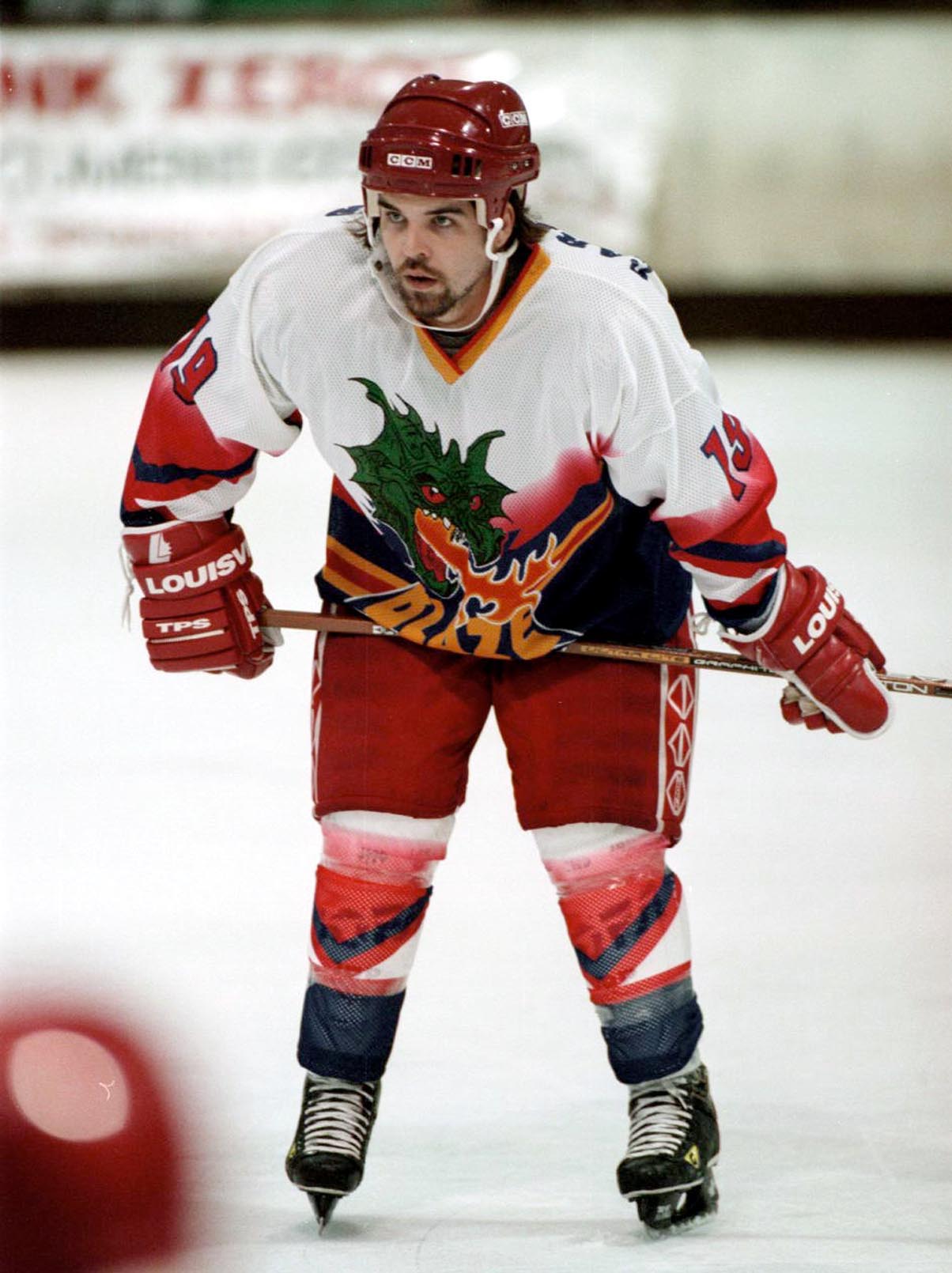
Steve Carpenter in action for Solihull Blaze, where his British hockey adventure began under coach Paul Thompson.
Steve's first experience of British hockey was memorable before he'd even set foot inside an ice rink.
Arriving at Gatwick Airport following an eight-hour flight, he was collected by Solihull team manager John Doyle.
Unfortunately, there appeared to have been a slight misunderstanding over transport arrangements.
Doyle had arrived in a works van.
With the front seats already occupied, Carpenter and fellow import Craig Lockhead found themselves sitting on equipment in the back for the journey to Solihull.
Not exactly the glamorous introduction to professional hockey they might have imagined!
And then came his first meeting with Paul Thompson.
Thompson arrived, pulled out a packet of Benson & Hedges cigarettes and offered Steve one.
Not wanting to offend his new coach, Carpenter accepted, despite not really being a smoker.
It was the beginning of a relationship that would have a considerable influence on his British hockey career.
Thompson also spent plenty of time preparing Steve for the sight of Solihull's rink, apparently concerned that his new signing might take one look at the facilities and head straight back to Canada!
Fortunately, Carpenter stayed.
And British hockey was about to discover what sort of player it had acquired.
The Menacing Glare and the Art of the Open-Ice Hit
In his book Benched, Paul Thompson described Carpenter as an intense, argumentative and passionate defenceman who always wanted the last word.
He also recalled those dark eyes and the intimidating glare that opponents knew so well.
When I put Thompson's description to Steve during our interview, he laughed and admitted there was more than a little truth in it.
Growing up as the youngest of three boys in an extremely competitive family had helped shape his personality.
He wasn't prepared to be intimidated, either on or off the ice.
But Carpenter was also remarkably realistic about his abilities.
He knew he wasn't the quickest skater, didn't possess the hardest shot and wasn't going to score 50 goals a season.
What he could do, however, was change the momentum of a hockey game with one perfectly timed body check.
Steve explained that a big hit could have two very different effects on the opposition.
Some players would become reluctant to carry the puck through the middle of the ice.
Others would become so determined to retaliate that they forgot about playing hockey.
Either way, Carpenter had achieved something valuable for his team.
It was a philosophy that would follow him throughout his career.
He didn't need to score the winning goal to influence the result. Sometimes, all he needed was one hit.
Solihull's Dressing-Room Characters
Ask any former player about a particular season and, sooner or later, the conversation turns to the dressing room.
For Carpenter, Solihull was full of characters.
One was Scottish forward Les Millie, who sat alongside him in the dressing room.
Steve admitted that Millie's thick Scottish accent was so difficult to understand that it was almost Christmas before he could follow much of what his teammate was saying.
His solution was simple — laugh when Les laughed and nod along!
Millie also introduced him to Irn-Bru, while regularly bringing his young son to visit the house shared by several of Solihull's imports.
Then there was Justin George, an old friend from junior and college hockey, whose stories could always be relied upon to raise a laugh.
But perhaps the biggest character of all was Kurt Irvine.
Off the ice, Irvine was quiet, pleasant and softly spoken.
On the ice, he was an entirely different proposition.
Carpenter remembered a fiercely competitive player who refused to back down from anybody and would do whatever was necessary to help his team win.
That Solihull side had tremendous spirit.
Unfortunately, it also faced serious financial problems.
Playing for Solihull When the Money Stopped
Towards the end of the 1996–97 season, Solihull's financial difficulties began to affect the players directly.
Wages went unpaid.
Supporters even organised bucket collections to help the team.
For the Canadian imports, many of whom had travelled thousands of miles to play professional hockey, it was an extremely difficult situation.
Some players returned home.
Others, including Carpenter, decided to stay and complete the regular season.
Steve credited Paul Thompson's man-management skills with holding the team together.
Rather than demanding more and more from players who weren't being paid, Thompson understood the circumstances and adjusted his approach.
The players wanted to finish what they'd started.
They continued chasing Swindon for the league title, eventually finishing runners-up.
But they had agreed that they would not continue into the playoffs.
For Carpenter, it was an early lesson in the realities of British professional hockey.
It was also the beginning of his considerable respect for Thompson.
And although the season ended in disappointment, Steve had already made an impression on one of the biggest clubs in the country.
Nottingham Panthers Come Calling
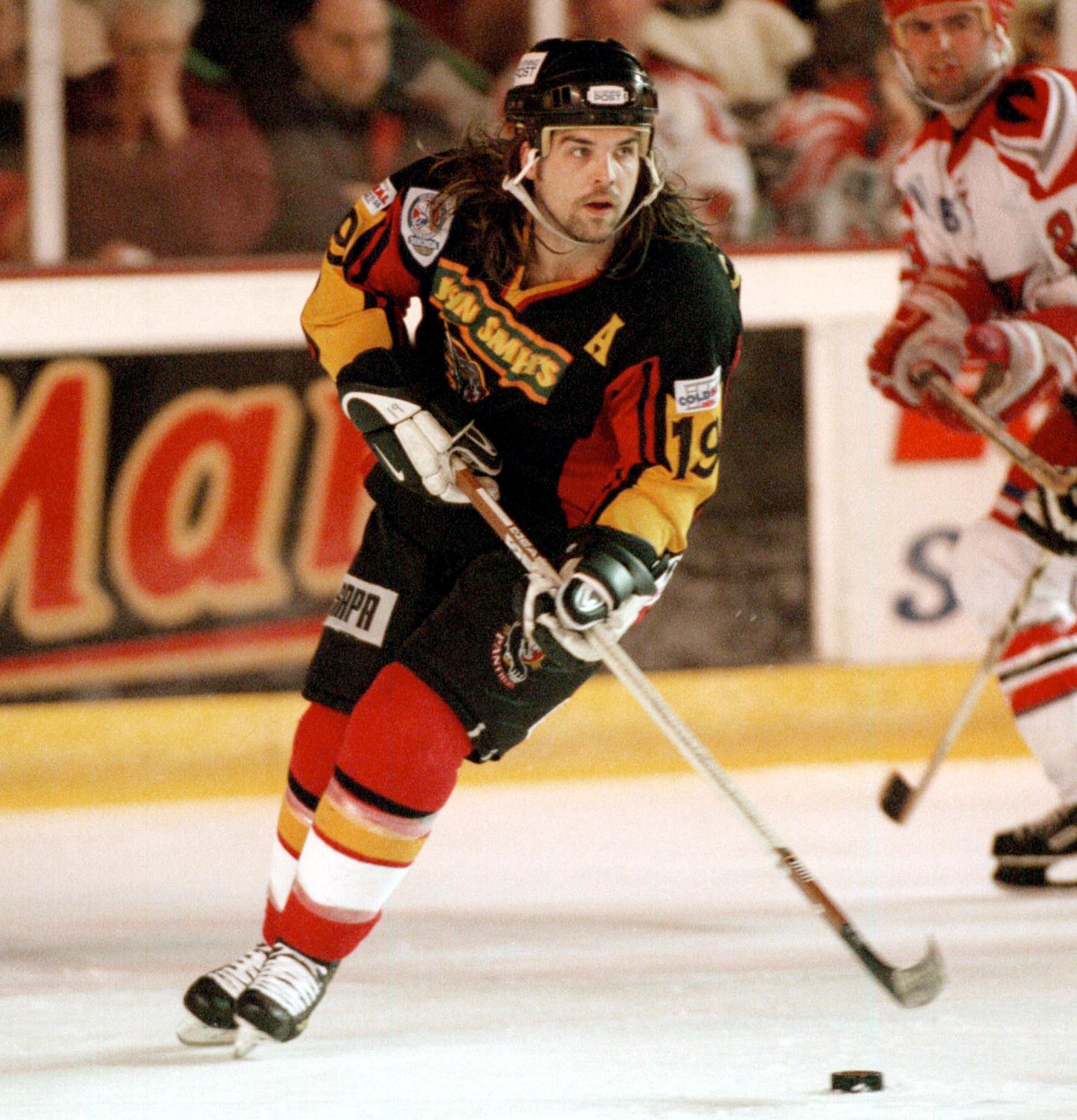
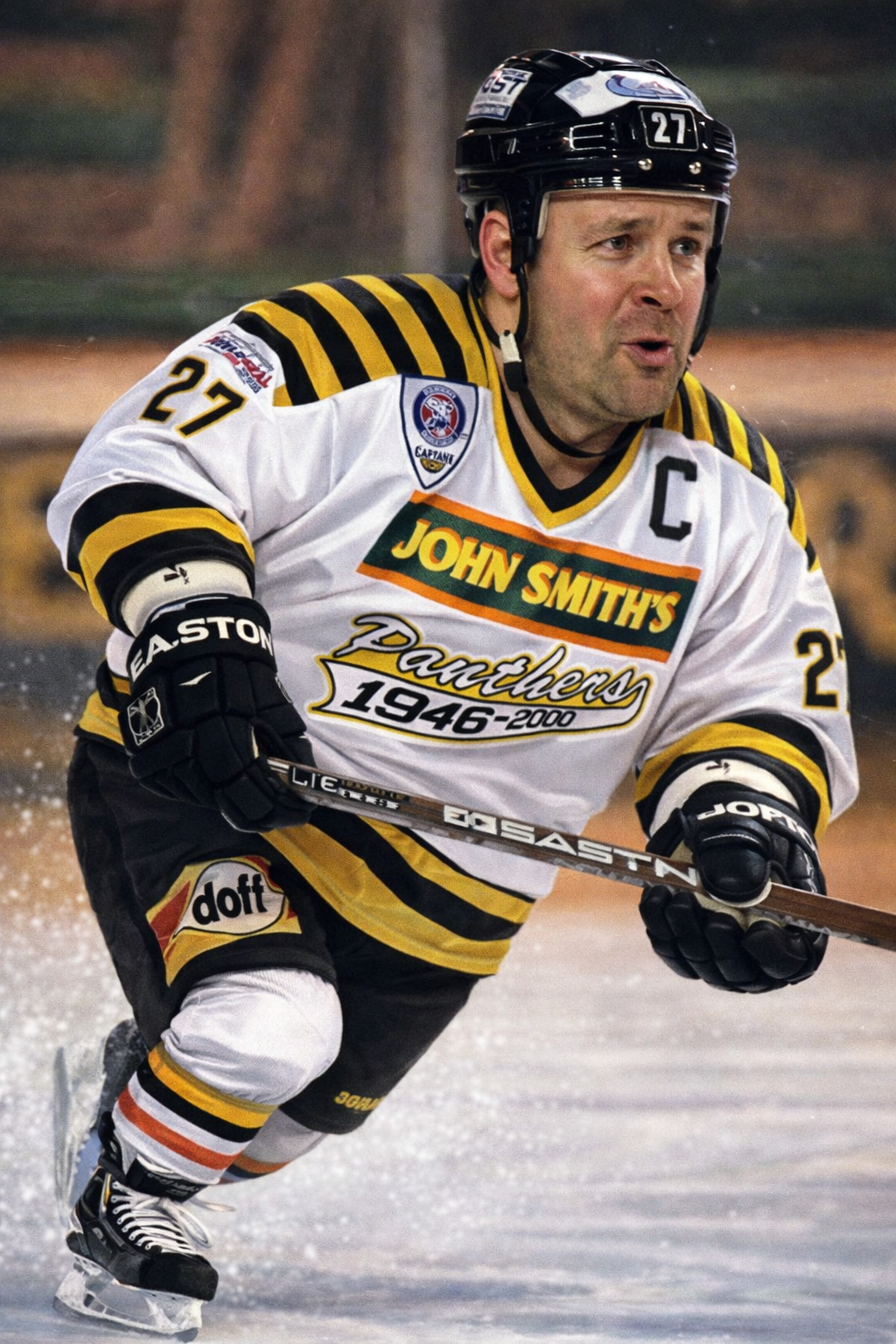
Steve Carpenter during his Nottingham Panthers career, where he established himself as one of the Superleague's most formidable open-ice hitters.
During that Solihull season, Carpenter faced Nottingham Panthers in a cup encounter.
Among the Nottingham players was Greg Hadden, a close friend from his junior, college and professional hockey days in North America.
Carpenter remembered delivering a particularly heavy hit on Panthers forward Derek Laxdal during the game.
It was the sort of challenge that could easily have sparked a major confrontation, particularly against a Nottingham side containing several physically imposing players.
But it also caught the attention of Panthers coach Mike Blaisdell.
After the game, Blaisdell approached Carpenter and asked about his plans for the following season.
The conversation eventually led to a three-year contract with Nottingham.
Paul Thompson, who had become something of an agent for Steve, helped arrange the move.
For Carpenter, it meant stepping up into the British Ice Hockey Superleague.
And he was about to discover that playing alongside and against more experienced, higher-calibre players actually suited his game.
Why the Superleague Suited Carpenter
You might imagine that stepping into a league containing former NHL and AHL players would have been a daunting prospect.
Carpenter saw things differently.
He explained that, for a player who understood positioning and could read the game, higher-quality hockey could actually be easier to play.
Better players were more predictable in the way they fulfilled their roles.
Defencemen knew where their partners were likely to be.
Forwards understood where to position themselves.
And for somebody whose greatest strength was anticipating an opponent's next movement, that made an enormous difference.
Carpenter thrived in Nottingham.
During his three seasons with the Panthers, he was part of a side that won the Benson & Hedges Cup and reached major finals in the Superleague era.
But when asked about his favourite memories, he didn't immediately mention trophies.
Instead, he talked about Manchester.
Manchester Playoff Weekends – Something Special
For North American players accustomed to best-of-five or best-of-seven playoff series, the British Superleague's Manchester playoff weekends were a completely different experience.
And Carpenter loved them.
He remembered supporters from rival clubs mixing together in the bars, restaurants and nightclubs around the arena.
Panthers fans talking to Steelers supporters.
Manchester Storm fans sharing a drink with Cardiff Devils followers.
Players being congratulated by supporters wearing opposing teams' jerseys.
It was an atmosphere unlike anything he'd experienced back home.
The fierce rivalries remained on the ice, but away from the rink there was a genuine sense of shared enjoyment.
Carpenter recalled spending time at Archers, where the bars and nightlife became part of the playoff weekend experience.
For those who remember British hockey's great playoff weekends, his recollections will sound wonderfully familiar.
Mark Twaite, Fishing Trips and Nottingham Nightlife
Before interviewing Steve, I contacted several of his former teammates to discover what they remembered about him.
Former Panthers forward Mark Twaite was particularly enthusiastic.
He immediately mentioned Monday fishing trips to Rutland Water, along with evenings at Café Mets, Ritzy and the inevitable late-night visit to Maris Kebab House.
Carpenter burst out laughing when I passed on Twaite's memories.
For a Canadian accustomed to travelling into the wilderness to catch wild trout, his first British fishing experience came as something of a surprise.
Instead of a remote stream, the players arrived at a managed fishing venue where they paid for the opportunity to catch stocked trout.
It wasn't quite what Steve had expected!
But those outings became part of the friendship he developed with Twaite, Hadden, Mike Bishop and other teammates.
And then there were the Monday nights.
Twaite, who knew Nottingham's nightlife extremely well, regularly encouraged his Canadian teammates to join him.
Steve remembered being told to bring his 'dancing slippers', a phrase that initially left him rather confused.
The late-night kebab house became such a favourite that, when Carpenter returned to Nottingham years later for a wedding, it was one of the places he wanted to revisit.
Those memories clearly meant just as much as the hockey itself.
What His Teammates Really Thought of Him
The responses I received from Carpenter's former teammates revealed just how highly he was regarded.
Mark Twaite remembered his devastating centre-ice hits, but also praised his attitude and defensive contribution.
Steve was prepared to block shots, play on the penalty kill and do the less glamorous jobs that helped a team win.
Twaite even likened him to having a second goaltender on the ice.
Hilton Ruggles had a rather more painful recollection.
During his time with Newcastle, Ruggles had heard about Carpenter's reputation but initially wondered what all the fuss was about.
After all, Steve wasn't particularly big.
Then Carpenter hit him.
Ruggles remembered being knocked backwards and feeling the effects of the collision for days afterwards.
He described Carpenter as a clean, fair body checker rather than an enforcer — but somebody who could inflict considerable pain if he caught an opponent squarely.
Luke Shabbat offered a similarly glowing assessment, describing Carpenter as the finest open-ice hitter he'd played alongside.
And former Nottingham teammate Jamie Leach remembered a tough, hard-working player who would do anything to win.
Leach also described Carpenter as a great 'wingman'.
When I asked Steve whether that referred to his hockey ability, he laughed.
Apparently, Jamie had been referring to their activities away from the ice!
There was also a mysterious reference to 'borrowing' the Benson & Hedges Cup.
Carpenter wisely declined to elaborate.
Some dressing-room stories, it seems, are best left between teammates.
The Move Across the Great Divide – Nottingham to Sheffield
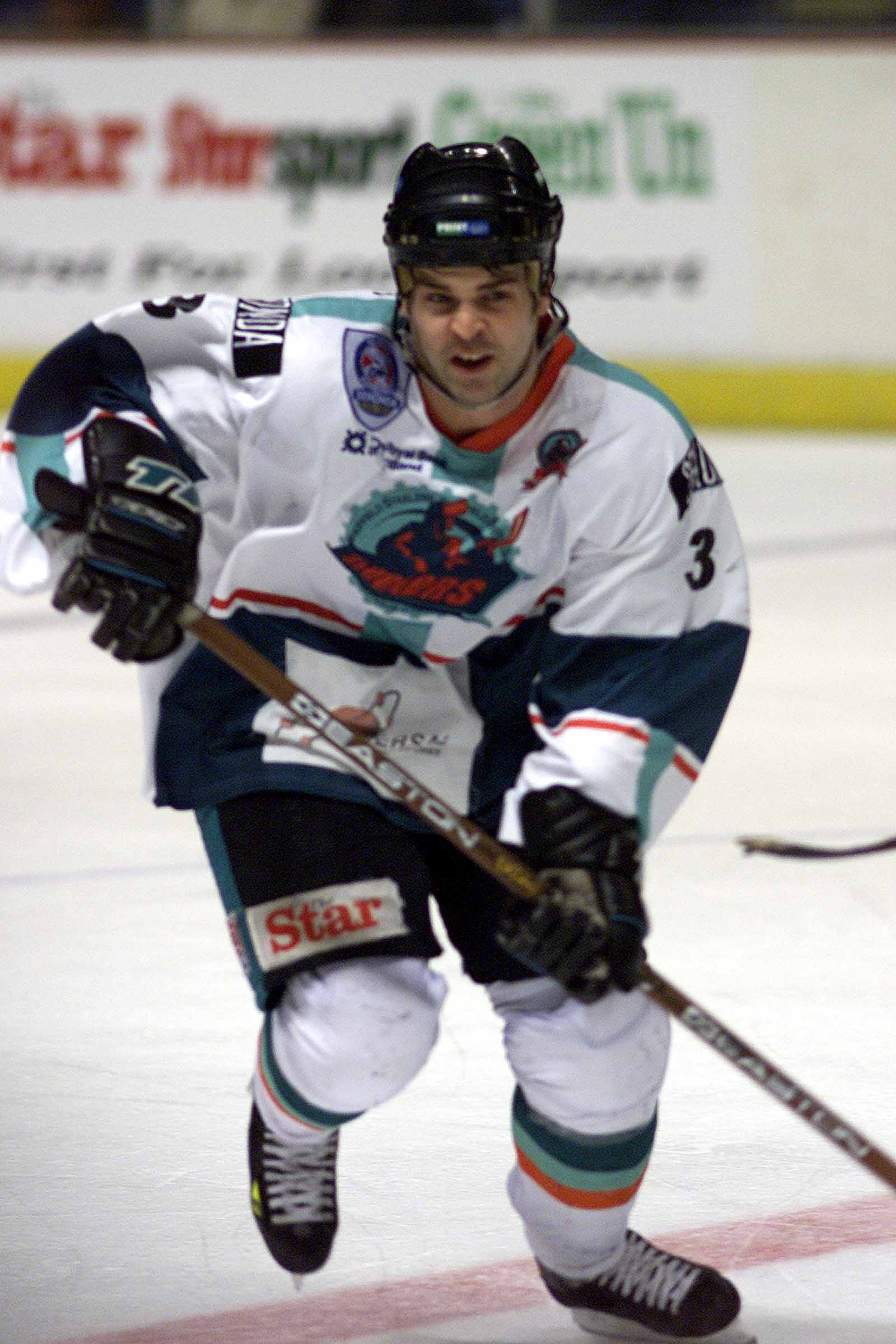
Steve Carpenter in Sheffield Steelers colours during the 2000–01 Superleague era, when the club completed its famous Grand Slam.
Few transfers in British ice hockey attract quite the same attention as a player moving directly between Nottingham Panthers and Sheffield Steelers.
For supporters, the rivalry is deeply personal.
For players, however, professional careers sometimes require difficult decisions.
Carpenter had enjoyed his time in Nottingham, but things changed following Mike Blaisdell's departure.
Steve recalled that he didn't feel particularly established in the plans of Blaisdell's successor.
Meanwhile, Blaisdell had moved to Sheffield and wanted to reunite with a player he knew and trusted.
The opportunity was too good to refuse.
In the summer of 2000, Carpenter joined the Steelers.
He understood what the move meant to supporters on both sides of the rivalry.
But he also made an important distinction.
Players might battle fiercely for sixty minutes, yet once the game was over, many of those same opponents were friends.
For Carpenter, the opportunity to play for a coach he respected and compete for more silverware made the decision straightforward.
And what followed was one of the most memorable seasons in Sheffield Steelers history.
Sheffield Steelers – A Grand Slam Season
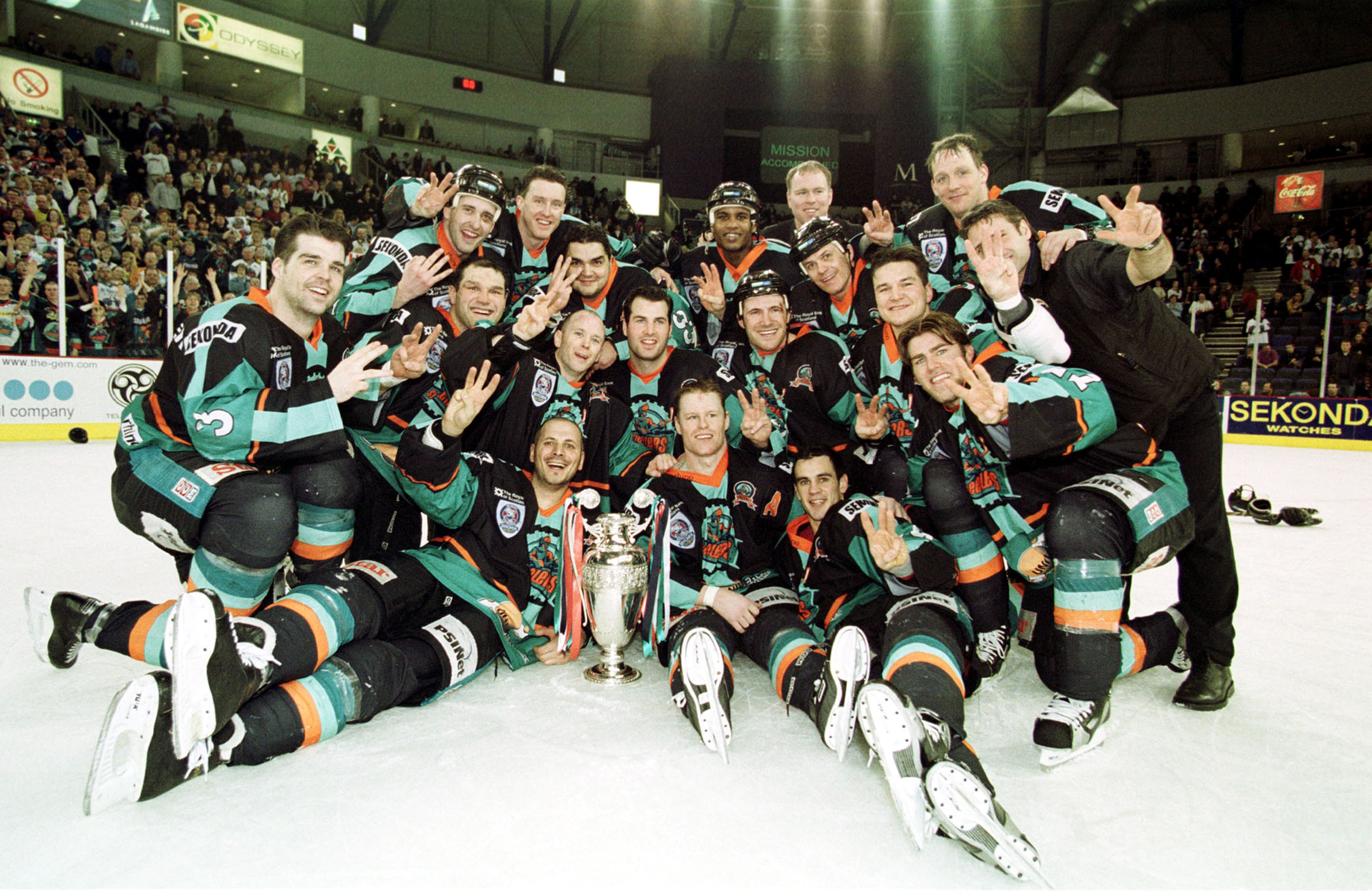
Sheffield Steelers celebrate their remarkable 2000–01 season. Steve Carpenter was part of Mike Blaisdell's Grand Slam-winning squad.
Steve Carpenter was part of a remarkable period in Sheffield Steelers history, playing alongside some of the club's most celebrated names. Among them was Ron Shudra, whose own journey from Canadian prospect to Sheffield legend became one of British ice hockey's great success stories.
Read more: Ron Shudra – Mr Sheffield Steelers
The 2000–01 Sheffield Steelers assembled by Mike Blaisdell was packed with talent, experience and physical presence.
Carpenter found himself partnered on defence with Dennis Vial.
It was a pairing that combined two players who were never likely to shy away from confrontation.
Alongside them were players including Shane McCosh, Adam Smith, Jeff Sebastian and Kyle Short.
Carpenter remembered a defensive unit in which each pairing brought something different — attacking ability, defensive responsibility and physical toughness.
The forwards were outstanding.
The goaltending was excellent.
And the team developed the sort of chemistry that championship-winning sides require.
The Steelers went on to complete their famous Grand Slam.
For Carpenter, it was another major achievement in a career already decorated with success.
But once again, there were problems behind the scenes.
Winning Trophies While Fighting for Wages
Despite their extraordinary success on the ice, the Steelers experienced serious financial difficulties.
Carpenter remembered the players reaching a point where they had to decide whether they were prepared to continue without receiving money they were owed.
On one occasion, the team insisted that outstanding wages be paid in cash before they would board the bus.
Steve also recalled a meeting in Belfast where the players voted on whether to play.
According to his recollection, nineteen voted against playing without payment, with only one favouring continuing.
It was an extraordinary situation for a team enjoying such success.
Yet Carpenter believed those difficulties helped demonstrate the character of the squad.
Players such as David Longstaff, Dennis Vial, Shane McCosh and Paul Adey were part of a dressing room that combined strong personalities with a shared determination to succeed.
They stuck together.
And despite everything happening away from the rink, they delivered one of the most celebrated seasons in the club's history.
Dennis Vial – A Partnership Built on Toughness
Playing alongside Dennis Vial produced some unforgettable moments.
Carpenter recalled a particularly brutal fight between Vial and Mike Ware.
Vial had appeared to be getting the better of the exchange when Ware landed a tremendous punch that knocked him down.
Steve remembered helping his defensive partner back to the bench.
What followed was a story that, viewed through today's understanding of concussion injuries, is rather alarming.
Carpenter recalled discreetly helping Vial remember answers during a concussion assessment so that he could return to the game.
At the time, it was treated as part of the toughness and determination expected of professional hockey players.
Looking back, however, Steve recognised how differently such incidents should be handled.
He had his own painful experiences with head injuries.
During another game, this time in Manchester, Carpenter collided heavily with an opponent and landed awkwardly.
He remembered suffering concussion symptoms and losing part of the vision in one eye.
Rather than leaving the game, he attempted to switch defensive positions with Vial because he could no longer see properly on his usual side.
The situation eventually led to an argument with Blaisdell, who initially couldn't understand why his defensive pairing had changed positions.
It was only when Steve explained his impaired vision that the coach understood.
The story illustrates both the extraordinary toughness of players from that era and the risks they sometimes took.
The Battle of Lower Parliament Street
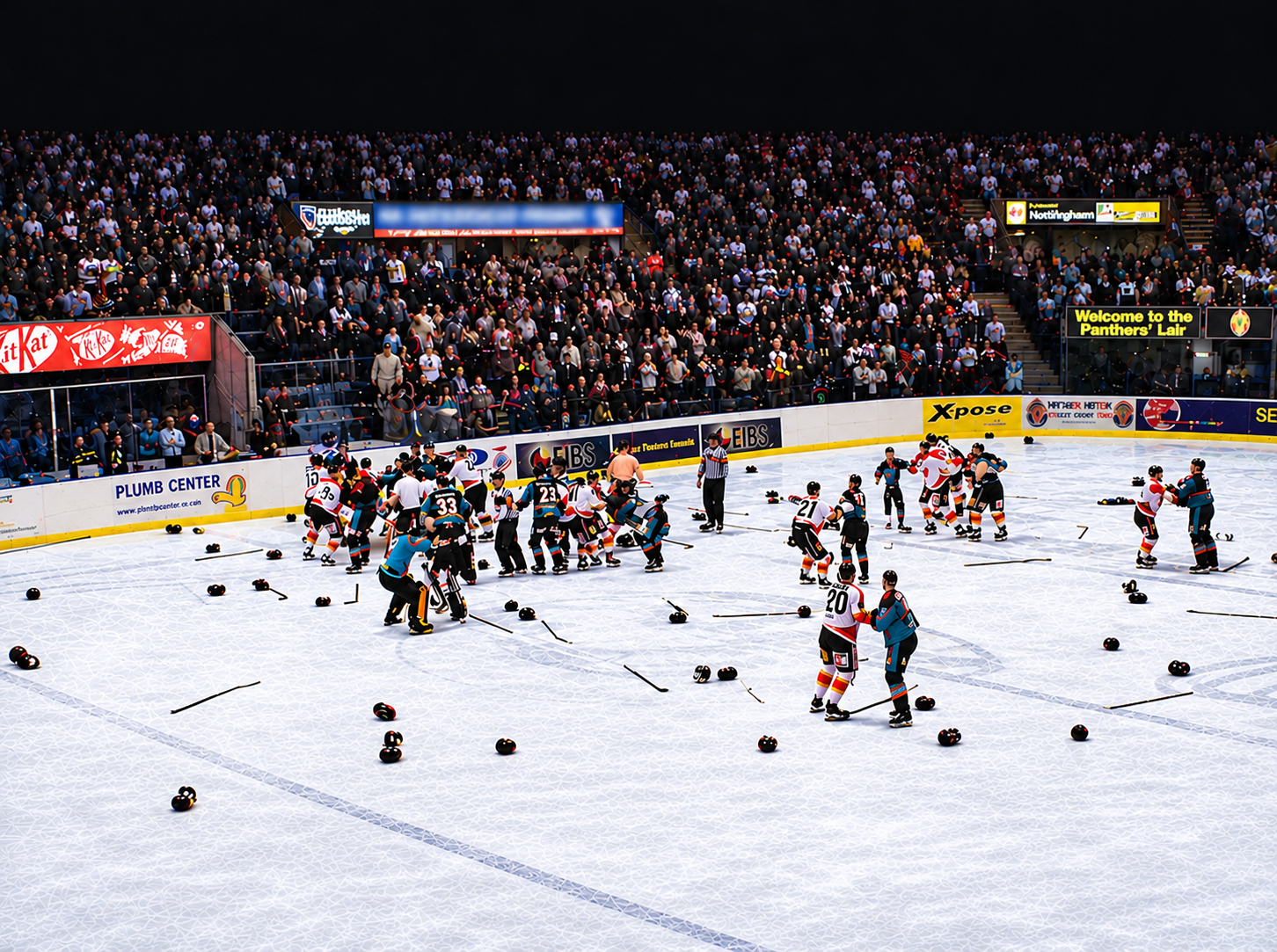
The infamous Battle of Lower Parliament Street, February 2001. Nottingham Panthers and Sheffield Steelers players clash during one of the most notorious confrontations in British Superleague history.
Digitally edited image based on contemporary Ice Hockey News Review coverage
For Nottingham Panthers and Sheffield Steelers supporters, one confrontation from the 2000–01 season remains particularly memorable.
The infamous bench-clearing brawl at the National Ice Centre.
The Battle of Lower Parliament Street.
And Steve Carpenter was right in the middle of it.
During our interview, he offered his own detailed recollection of how the incident unfolded.
Carpenter and Dennis Vial were on the ice when Vial became involved in an increasingly heated exchange with Nottingham's Greg Hadden.
The two players had been exchanging slashes and tempers were rising.
According to Carpenter, Barry Nieckar then entered the confrontation and delivered a cross-check to Vial.
Steve was the nearest Sheffield player.
And despite giving away considerable size and weight to Nieckar, he felt he had no option but to intervene.
He dropped his gloves and grabbed hold of the Panthers player.
What happened next was chaotic.
Carpenter initially thought he'd somehow managed to bring the much bigger man to the ice.
Only later did he realise that Scott Allison had also entered the confrontation, affecting Nieckar's balance.
With players converging from all directions, the situation rapidly escalated into a bench-clearing brawl.
Steve remembered trying to protect Nieckar while he was down, concerned that somebody might be seriously injured in the confusion.
Then he spotted Greg Hadden.
His close friend.
His former teammate.
And now an opponent wearing a Nottingham Panthers jersey.
The two began grappling, but another familiar face intervened.
Randall Weber.
According to Carpenter, Weber grabbed hold of the two men and pleaded with them not to fight because they were best friends.
It was one of the more remarkable moments in an already extraordinary confrontation.
For supporters, the Battle of Lower Parliament Street became another unforgettable chapter in British hockey's fiercest rivalry.
For Carpenter, it was an illustration of how quickly emotions could boil over — even between players who had known one another for years.
And, as he admitted with a laugh, it wasn't the first bench-clearing brawl he'd experienced.
Nor would it be the last.
When Hockey Rivalries Went Too Far
During our conversation, Carpenter also reflected on the fine line between promoting a fierce rivalry and allowing emotions to become dangerous.
He recalled a serious incident during his Solihull days involving a Swindon player whom he believed was Gary Dick.
Carpenter described delivering an open-ice hit that resulted in the opponent suffering a broken neck.
Steve maintained that he had not intended to injure the player and remembered the incident as an unfortunate collision.
He also recalled being reassured by Swindon's player-coach, whom he believed was Stan Marples, that the challenge had not been malicious.
But the incident subsequently generated considerable hostility.
When Solihull returned to Swindon, Carpenter remembered a threatening atmosphere involving people outside the normal hockey crowd.
He described teammates surrounding him as they left the rink, with security and police helping prevent the situation from escalating.
It was a frightening experience.
And one that reinforced his belief that, while fierce rivalries could attract spectators and create excitement, there was a responsibility not to allow them to spiral beyond the sport itself.
Coventry Blaze – Reuniting with Paul Thompson
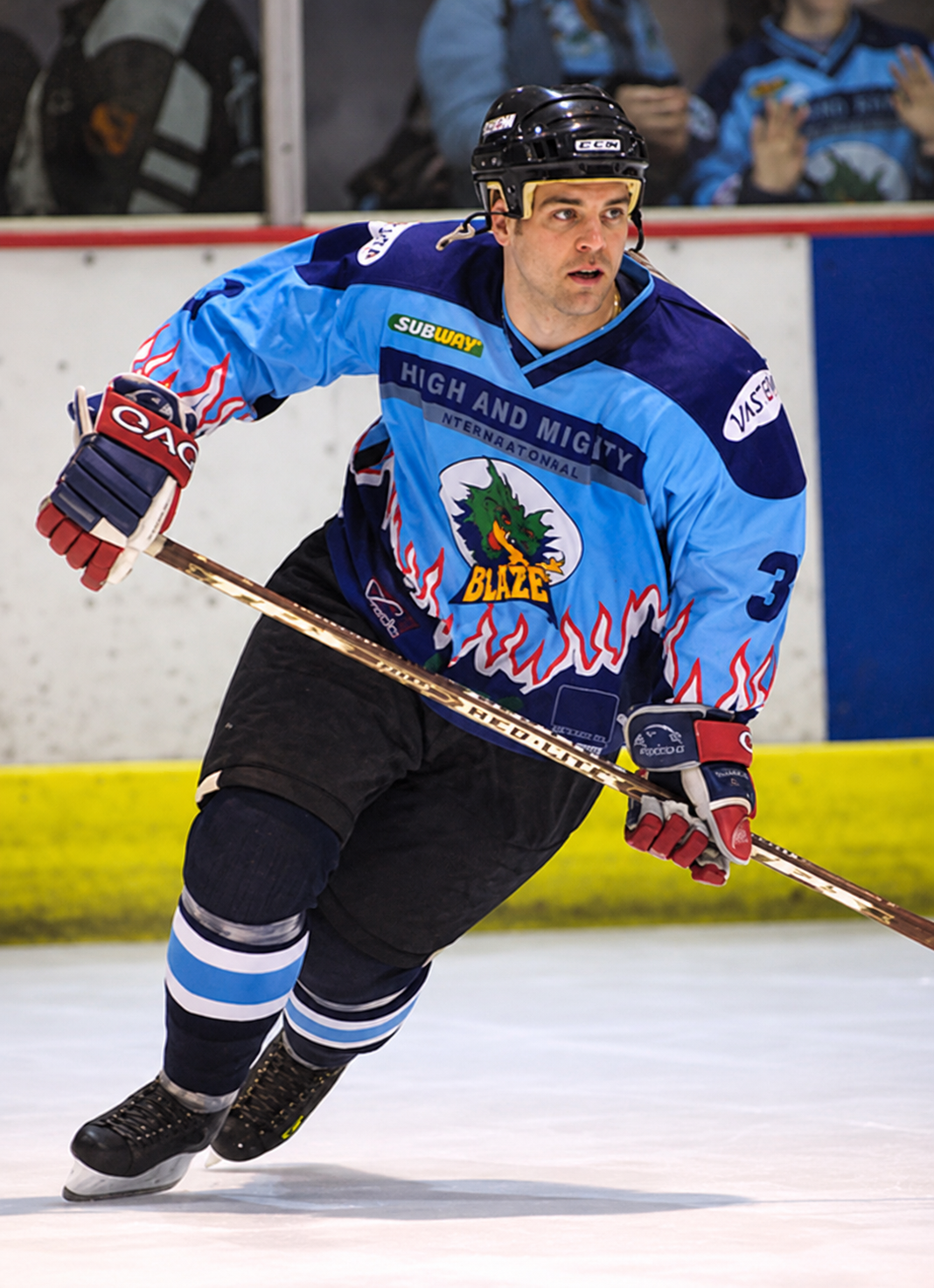
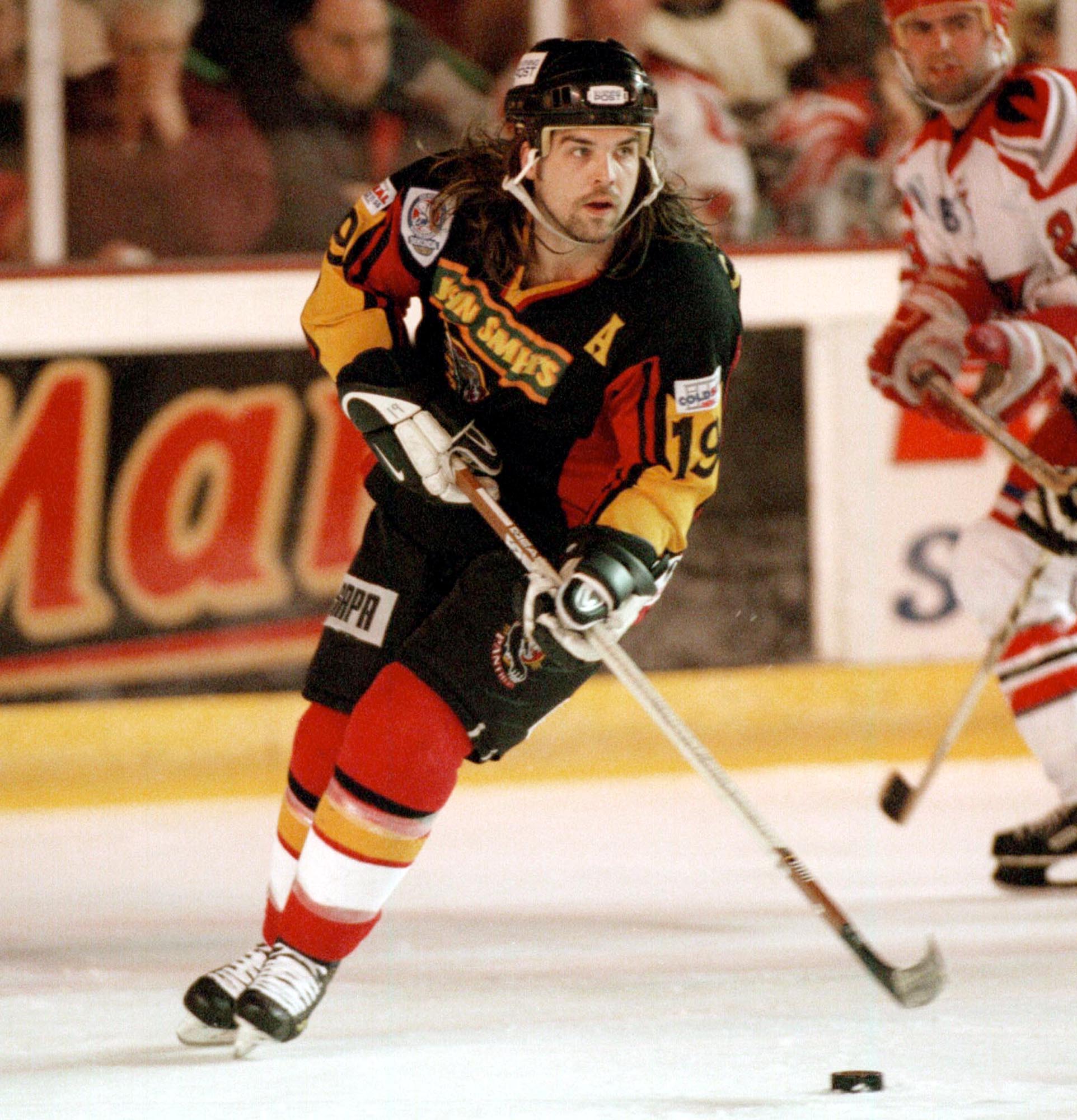
Steve Carpenter in Coventry Blaze colours after reuniting with Paul Thompson and helping the club achieve success in the British National League.
After Sheffield's Grand Slam season, Carpenter faced another important decision.
Despite the success on the ice, the financial uncertainty had become exhausting.
He wasn't sure what the future held for the Steelers.
Then Paul Thompson called.
The coach who had originally brought him to Britain was building something at Coventry Blaze and wanted Carpenter to become part of it.
There were familiar faces too.
Kurt Irvine, Luke Shabbat and Steve Chartrand were among the players Carpenter knew.
The chance to help build another successful team appealed to him.
And so, after competing at the highest level of British hockey, he moved into the British National League with Coventry.
The first season was frustratingly close to success.
Carpenter remembered Fife Flyers proving particularly troublesome.
Coventry finished runners-up in major competitions, including defeats against Fife in the league, playoffs and Findus Cup.
But Thompson continued strengthening the team.
Jody Lehman arrived.
The squad improved.
And the following season, Coventry enjoyed the success they had been chasing, winning the league and playoffs.
For Carpenter, it was another reminder of what could be achieved when a group of players bought into a common purpose.
From Body Checks to the Classroom
While playing for Coventry, Carpenter began thinking seriously about life after professional hockey.
Like many full-time imports, he found himself with considerable free time outside training and matches.
Rather than simply filling those hours with leisure activities, he decided to volunteer at a local school.
It was a decision that would change his life.
Steve discovered that he genuinely enjoyed working with children, particularly those who needed additional support.
A supporter subsequently told him about a paid educational assistant position.
He applied successfully.
That opportunity eventually led to teacher training, and by the time he reached the final stage of his hockey career, he was already building a second profession.
It was a remarkable transition.
The defenceman who had spent years intimidating opposing forwards was now helping young people develop confidence, overcome difficulties and achieve their potential.
And he loved it.
Milton Keynes Lightning – One Final Championship
By the time Carpenter moved to Milton Keynes Lightning, teaching was becoming an increasingly important part of his life.
He was working full-time in education and recognised that combining those responsibilities with the demands of top-level professional hockey would be extremely difficult.
Milton Keynes offered a better balance.
And, once again, he found himself surrounded by talented players and familiar faces.
Nick Poole, Gary Clark, Kurt Irvine, Michael Wales and Barry McKenzie were among the names he remembered from that squad.
There was also a strong group of British players who contributed to the team's success.
The Lightning went on to win the league and playoffs.
For Carpenter, it was a fitting conclusion to an extraordinary British hockey career.
He had arrived in Britain expecting a relatively brief adventure.
Instead, he'd spent years playing for some of the country's best-known clubs, winning major honours and building friendships that would last a lifetime.
But his body had also paid a price.
The Physical Price of Playing Hard
Carpenter never pretended that his style of hockey came without consequences.
At around 5ft 10in, he regularly threw himself into collisions with opponents considerably bigger than himself.
He blocked shots.
He delivered heavy body checks.
He played through injuries.
And over time, those experiences took their toll.
He recalled suffering two particularly serious concussions during his season with Milton Keynes.
Looking back with the knowledge he'd subsequently gained through coaching and concussion education, Steve admitted he would have approached those injuries very differently.
He also recognised that continuing to play after the visual disturbance he'd experienced in Sheffield had been unwise.
It was a thoughtful admission from somebody who had built his reputation on physical courage.
There was no suggestion that he regretted his career.
Quite the opposite.
But he understood that the sport's attitude towards head injuries had changed — and that was important.
By the time he retired, Carpenter knew his body had given enough.
And he had another career waiting.
The Superstitions of Steve Carpenter
For somebody who approached hockey with such determination, Carpenter also had an extraordinary collection of pre-game rituals.
He admitted to being intensely superstitious.
Everything mattered.
The way he taped his stick.
The order in which he put on his equipment.
His pre-game routines.
Being the last player onto the ice.
Even the way he tapped the goalposts.
If he did something before a particularly good performance, there was every chance it would become part of his permanent routine.
During his Coventry days, he regularly visited the same coffee shop, read the newspaper and bought the same pre-game meal.
A jacket potato with beans and cheese.
He also carried a lucky Boston Bruins cap.
By the end of one season, he reckoned he'd accumulated around sixteen separate rituals.
The problem was that they kept multiplying!
It was a wonderfully human side to a player remembered primarily for his physical presence.
The Supporter Who Wanted to Fight Him
Carpenter's playing style inevitably attracted plenty of attention from opposing supporters.
Some loved him.
Others couldn't stand him.
And Steve understood that being the target of abuse was part of the theatre of professional hockey.
But one particular encounter stayed with him.
During a game away from Solihull, which he believed was at Hull, a supporter spent virtually the entire evening shouting insults and threats at him.
After the match, Carpenter spotted the same man in the bar.
Rather than ignoring him, Steve calmly pulled up a chair, sat down and asked whether they had a problem.
The previously outspoken supporter suddenly became rather less enthusiastic about confrontation.
His friends found the whole situation hilarious.
But the story didn't end there.
When Carpenter returned for another game, the same supporter was back to his usual routine, shouting abuse from the stands.
This time, however, he'd arranged for a beer to be waiting for Steve in the bar afterwards.
It was a perfect example of the peculiar relationship that sometimes develops between hockey players and opposition supporters.
The insults were part of the entertainment.
The respect came afterwards.
A Career Built on Playing for the Badge
Throughout our conversation, Carpenter returned repeatedly to one particular belief.
Successful hockey teams are built around players who understand their responsibilities and put the collective effort ahead of individual recognition.
He'd seen talented teams fail because players were more interested in personal statistics than winning.
And he'd been fortunate enough to play for teams where everyone understood what was required.
Some players scored the goals.
Others made the saves.
Some delivered the big hits.
Others blocked shots, killed penalties or simply did the difficult work that rarely appeared in the headlines.
For Carpenter, all those contributions mattered.
He summed up his philosophy with one of the most memorable observations of the interview:
"You play for the front of your jersey and you don't play for the back of your jersey."
It was a simple statement.
But it explained an enormous amount about the way Steve Carpenter approached the game.
What Steve Carpenter Misses Most
When I asked Steve what he missed most about playing professional hockey, his answer wasn't the trophies.
It wasn't the big hits.
It wasn't even the roar of the crowd.
It was the camaraderie.
The dressing room.
The bus journeys.
The practical jokes.
The laughter.
The feeling of being part of a group of people working towards the same goal.
He spoke warmly about the friendships he'd formed and the experiences he'd shared with teammates and supporters throughout Britain.
For Steve, those relationships were the real reward.
He knew that the championship victories and unforgettable confrontations would always be part of his story.
But when he looked back on his British hockey years, it was the people who made him smile.
At the time of our interview, Carpenter was working as a vice-principal at a large elementary school in British Columbia.
His responsibilities included supporting children who struggled in conventional classroom environments, teaching physical education and helping manage the school.
It was a very different world from the British Ice Hockey Superleague.
Yet the same qualities that had made him such a valuable teammate — determination, loyalty, leadership and a willingness to help others — were now being put to use in education.
A Lasting Impression on British Ice Hockey
Steve Carpenter's career in Britain covered an extraordinary period.
He arrived during the British hockey landscape of the mid-1990s, experienced the glamour and financial difficulties of the Superleague, played a central role in Sheffield's Grand Slam success and later helped Coventry and Milton Keynes achieve major honours.
Along the way, he became one of the most respected physical defencemen of his generation.
His former teammates remembered the hits.
Opposition players remembered the hits.
And supporters certainly remembered the hits.
But there was always much more to Steve Carpenter than his ability to flatten an opponent.
He was a winner.
A team player.
A fierce competitor.
And somebody who genuinely valued the people he met through hockey.
As our interview drew to a close, Steve reflected on just how much his time in Britain had influenced his life.
"England was a huge, huge part of who I am and how I treat people and the way I go about my days and my life."
Those words perhaps say more about his British hockey career than any list of trophies ever could.
For the supporters who watched him play, Steve Carpenter will always be remembered as the defenceman who could change a game with one devastating open-ice hit.
But for Steve himself, the greatest memories were the friendships, the laughter and the years spent sharing a dressing room with people who became friends for life.
And that, perhaps, is the real story behind the legend.
🎙️ Listen to the Steve Carpenter Interview
This feature is based on my original Old Time Hockey UK podcast conversation with Steve Carpenter, in which he shares his memories of Solihull Blaze, Nottingham Panthers, Sheffield Steelers, Coventry Blaze and Milton Keynes Lightning.
Hear Steve's stories in his own words, including his account of the Battle of Lower Parliament Street, his friendship with Jamie Leach, the characters he encountered throughout British hockey and the experiences that shaped his life after retirement.
Listen to the full Steve Carpenter podcast interview
Over to You – Your Memories of Steve Carpenter
Were you fortunate enough to watch Steve Carpenter play during his years in British ice hockey?
Perhaps you remember one of those enormous open-ice hits at the old Nottingham Ice Stadium, the National Ice Centre, Sheffield Arena or elsewhere around the country.
Maybe you watched him during his Solihull or Coventry days, or remember his final season with Milton Keynes Lightning.
Was Steve Carpenter one of the hardest clean hitters you ever saw in British hockey?
And if you have a particular memory of Carpenter — whether as a teammate, opponent or supporter — we'd love to hear it.
Share your memories with Old Time Hockey UK.
Old Time Hockey UK – Reliving British Hockey's Golden Years.

Ken Abbott is the creator and host of Old Time Hockey UK, celebrating the players, teams, rinks and unforgettable moments from British ice hockey’s golden years.
A Nottingham Panthers supporter since the early 1980s, Ken has been involved with British hockey for more than four decades, including over 20 years in the hockey retail business.
He launched the Old Time Hockey UK podcast in 2014, interviewing many of the players, coaches and personalities who helped shape the British game. Today, Old Time Hockey UK brings together those podcast conversations with archive stories, classic games, legendary players and memories from the rinks we still miss.
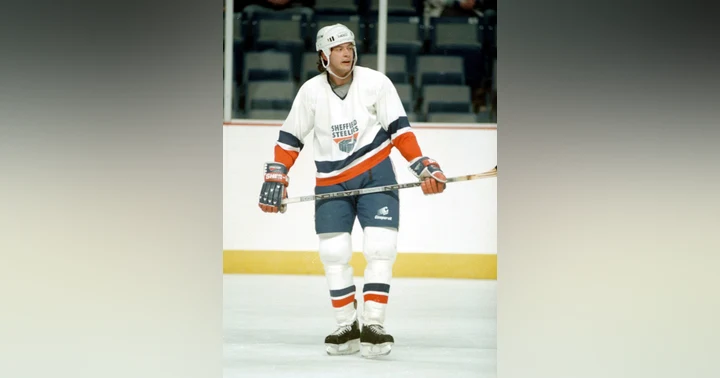
Rocket Ron Shudra: The Stories Behind a Sheffield Steelers Legend