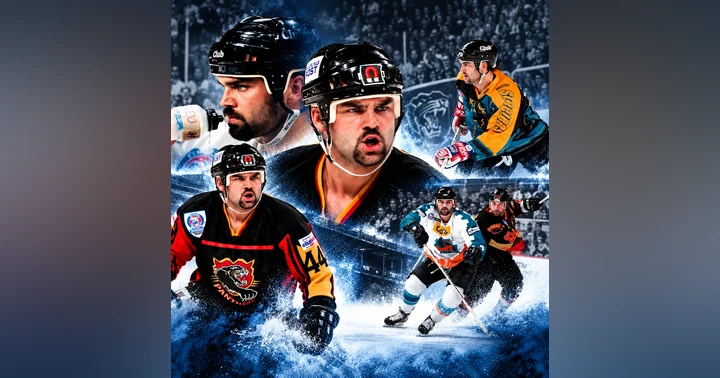
Graham Waghorn – Eight Seasons, Three Coaches and a Lifetime of Panthers Memories

Graham Waghorn – Eight Seasons, Three Coaches and a Lifetime of Panthers Memories
LEGENDS OF THE GAME | OLD TIME HOCKEY UK
From a frozen Canadian back garden to Nottingham's famous Lower Parliament Street, Graham “Wags” Waghorn experienced British ice hockey through two very different eras. Eight seasons with the Nottingham Panthers brought trophies, fierce rivalries, unforgettable characters and stories that probably should have stayed in the dressing room.
For Nottingham Panthers supporters who followed the club through the 1990s, Graham Waghorn was a familiar figure on the blue line.
A dependable, competitive British defenceman, Waghorn became part of the Panthers' furniture during a period of enormous change in British ice hockey.
He arrived in Nottingham in 1990, when the Heineken League was still dominated by packed, atmospheric old ice rinks, and remained through the arrival of the Ice Hockey SuperLeague, with its larger arenas, bigger budgets and increasingly international flavour.
Along the way, he played under Alex Dampier, Kevin Murphy and Mike Blaisdell, celebrated memorable cup success, experienced the heartbreak of losing a championship to Sheffield Steelers and shared dressing rooms with some of the biggest characters British hockey has ever known.
And to think, his Nottingham career might never have happened but for a dispute over a transfer fee of just £100.
From Canada to Streatham – The Early Years
Born on 31 December 1972 in Newmarket, Ontario, Graham Waghorn's introduction to ice hockey came almost as soon as he could walk.
His grandfather flooded the back garden to create a makeshift rink, and Graham was skating by the age of three. By four, he was playing hockey.
His father, Jack Waghorn, was English, and when Graham was eight, the family moved to Britain, eventually settling in Sussex.
It wasn't long before the young Waghorn became involved with the Streatham junior system, one of the strongest development programmes in British ice hockey at the time.
His progress was rapid.
While still only 15, Graham was invited into the senior Streatham Redskins setup under coach Red Emery.
It was quite an introduction to senior hockey.
Training with the juniors, Streatham Bruins and the senior Redskins meant that hockey occupied much of his week. And although the Redskins were struggling on the ice, the experience proved invaluable.
There was also the small matter of sharing a dressing room with Kurt Wickenheiser.
Graham remembers Wickenheiser as a tremendous hockey player and one of the funniest characters he ever encountered.
Practical jokes were part of everyday life.
Skates mysteriously tied together, shaving foam applied to sleeping teammates on bus journeys and even beer poured over pizzas during post-match meals.
Wickenheiser certainly knew how to keep a dressing room entertained.
Solihull, Moose Jaw and the £100 That Changed Everything
After Streatham's relegation, Waghorn decided he needed a fresh challenge.
He joined Solihull Barons, where Ian Finlayson was coaching, but his time there was interrupted by a serious knee injury suffered during a game in Nottingham.
A collision involving Gavin Fraser left Graham requiring surgery for damaged cartilage.
However, an unexpected opportunity soon presented itself.
Through contacts involving former Streatham players and Canadian junior hockey scouts, Waghorn was offered the chance to join the Moose Jaw Warriors of the Western Hockey League.
It was an opportunity too good to refuse.
He travelled to Canada in February and discovered an entirely different hockey environment.
The training, physical demands and commitment required in the WHL were an eye-opener.
Graham returned for training camp the following summer and successfully made the Warriors roster.
Everything appeared to be falling into place.
Then came the problem.
Solihull still held his international transfer rights.
To continue playing in Canada, a transfer fee had to be paid.
The amount involved?
Just £100.
Canadian junior hockey operated through trades rather than conventional transfer fees, and the Warriors were unwilling to pay.
Despite efforts to resolve the matter, Waghorn faced the possibility of losing an entire season at a crucial stage in his development.
Rather than sit out, he returned to Britain.
And that decision would change the course of his career.
A Chance Meeting That Led to Eight Years in Nottingham
Arriving back in England in August 1990, Waghorn headed almost immediately to the Altrincham tournament, hoping to find a club.
There he encountered Nottingham Panthers coach Alex Dampier and Tony Johnson.
Although Graham jokingly describes the meeting as something of a chance encounter, he admits it wasn't entirely accidental.
He knew exactly whom he wanted to speak to.
By the following evening, he was training in Nottingham.
What began as an unexpected return from Canada developed into an eight-season association with the Panthers.
And for supporters at the old Nottingham Ice Stadium on Lower Parliament Street, Waghorn would become one of the familiar faces of the club's 1990s teams.
The Alex Dampier Years – Passion, Temper and Trophies
Graham's first Panthers coach was the formidable Alex Dampier.
Dampier's teams played a direct, physical style of hockey, relying heavily on their leading players.
Waghorn remembers logging enormous amounts of ice time alongside Terry Kurtenbach, at a time when two-line hockey and the dump-and-chase approach were still commonplace.
But Dampier was much more than a tactician.
He was intensely passionate about the game.
And sometimes that passion spilled over.
Graham recalls one particularly memorable dressing-room incident following a dreadful first period.
With the Panthers playing poorly, Dampier's frustration boiled over.
He punched a metal support bracket attached to the dressing-room seating.
The bracket flew across the room, narrowly missing Waghorn and teammate Dave Graham before landing in the showers.
Fortunately, nobody was hurt.
Dampier's temper was legendary, but Graham also remembers a coach who cared deeply about his players and his hockey.
It was an era when emotions ran high, dressing rooms were cramped and the atmosphere inside the Nottingham Ice Stadium could be extraordinary.
Kevin Murphy, Mike Blaisdell and a Changing Game
Following Dampier's departure, Kevin Murphy took charge during a transitional period for the Panthers.
Murphy introduced younger players, including the popular group he called his "puppy line".
But the club was experiencing financial difficulties, and stability was desperately needed.
The arrival of Mike Blaisdell, together with the efforts of chairman John Flavell and others behind the scenes, helped transform Nottingham's fortunes.
Waghorn remembers Blaisdell bringing a different approach.
Where Dampier's teams had relied heavily on two lines, Blaisdell increasingly introduced three-line hockey, additional defensive combinations and a more structured passing game.
British hockey itself was changing.
The sport was becoming more professional, training demands were increasing and tactical preparation was taking on greater importance.
For players such as Waghorn, who had experienced both the old and emerging systems, the differences were considerable.
Yet both Dampier and Blaisdell shared one characteristic.
Neither was afraid to make his feelings known.
Sheffield 1994 – A Cup Final to Remember
One of Waghorn's happiest memories came during the 1994–95 season.
Nottingham Panthers faced Cardiff Devils in the Benson & Hedges Cup Final at Sheffield Arena.
For players accustomed to the relatively intimate surroundings of Lower Parliament Street, the arena was something else entirely.
The size of the building, the dressing rooms and the thousands of supporters created a very different experience.
And the Panthers rose to the occasion.
Nottingham Panthers 7 – Cardiff Devils 2.
A magnificent victory over one of their great rivals.
Waghorn remembers the excitement of playing in front of such a large crowd and, particularly, the blocks of travelling Nottingham supporters who helped create a wonderful atmosphere.
For a player who had experienced so many fiercely contested games against Cardiff, lifting a trophy at their expense was especially satisfying.
The Sheffield Steelers Heartbreak
Of course, not every memorable game ended in celebration.
Few Panthers supporters who witnessed the dramatic championship decider against Sheffield Steelers will ever forget it.
Nottingham led 5–2.
The title appeared within reach.
Then everything unravelled.
Sheffield fought back to win 8–6, leaving the Panthers devastated.
For Waghorn, the defeat was particularly painful.
He remembers remaining in the dressing room for around two and a half hours after the game.
The disappointment was overwhelming.
Lower Parliament Street had always been regarded as a fortress, a place where visiting teams were made to work for everything.
To surrender such a commanding lead, against Sheffield of all teams, was almost unbearable.
And Graham makes it clear that the rivalry meant just as much to the players as it did to the supporters.
Panthers against Steelers wasn't simply another fixture.
It was one of the games everybody wanted to play in.
The physical battles, the intensity and the atmosphere were precisely what made those encounters special.
Dressing-Room Characters – Gavin Fraser and TK
Ask former players about their time in British hockey, and sooner or later the conversation turns to dressing-room characters.
For Waghorn, two names immediately spring to mind.
Gavin Fraser and Terry Kurtenbach.
Both were outstanding personalities, and both enjoyed a practical joke.
Graham remembers Scottish road trips when Fraser and Kurtenbach would visit a joke shop near Edinburgh's Haymarket.
The purchases frequently included itching powder.
The consequences would usually become apparent during the following week's training sessions.
Nobody was entirely safe.
Fraser, in particular, was one of the funniest people Waghorn had ever met.
Dave Graham was another memorable character, although his imposing personality brought a rather different presence to the dressing room.
These were the personalities that helped make the Panthers such a close-knit group.
Players competed fiercely on the ice, but away from it, friendships and humour were essential parts of team life.
The Superstitious Defenceman
Every hockey dressing room has its rituals.
Some players have lucky sticks. Others follow a particular routine before every game.
Graham Waghorn took things considerably further.
He admits that, apart from Trevor Robins, he was probably one of the most superstitious players in the Panthers dressing room.
At home games, he wanted to be the first player into the dressing room.
But once preparations began, everything changed.
He had to be the last player onto the ice for warm-up.
The last player to leave the ice afterwards.
And the last player to tap the netminder's pads.
He also followed a particular routine around the goal before games.
Even his place in the pre-match player announcements mattered.
It was all about maintaining a routine that helped him prepare mentally.
And once a routine appeared to work, there was absolutely no reason to change it.
Durham, Whitley Bay and Those Wonderful Old Rinks
One of the great pleasures of listening to former Heineken League players is hearing their memories of the old British ice rinks.
For Waghorn, Durham was certainly memorable.
Although not necessarily for the right reasons.
The visiting dressing rooms were freezing.
There was an old paraffin heater, cold showers and even a hole in the floor through which players could see the river below.
Graham remembers leaving equipment overnight during Great Britain training camps and returning the following morning to find it practically frozen solid.
Whitley Bay wasn't much better.
The dressing rooms were basic, while the boards were so uneven that players could sometimes use the gaps and irregularities to avoid an incoming bodycheck.
But these were the things that gave the old rinks their character.
They were cramped, noisy, uncomfortable and often intimidating.
And they were absolutely wonderful places to experience British ice hockey.
Waghorn particularly enjoyed playing in Cardiff.
Like Nottingham, the supporters were close to the action, and the atmosphere made every visit a challenge.
There was little room to hide.
Every shift mattered.
The Fans – What Made British Hockey Special
For Graham, one of the biggest differences between the hockey he experienced and the modern professional game was the relationship between players and supporters.
During the Heineken League years, players regularly socialised with fans after games.
Whether at home or away, it wasn't unusual to find opposing players, supporters and officials sharing a drink and discussing the evening's action.
John Smith's-sponsored players' evenings were another familiar part of life in Nottingham.
Waghorn remembers those occasions fondly.
The players knew the importance of preparing properly for games, but once the hockey was finished, there was time to enjoy the friendships that had developed around the sport.
It wasn't simply about winning and losing.
It was about belonging to a hockey community.
For Waghorn, the British game of that era felt like one enormous family.
And that sense of togetherness is something he believes has diminished as the sport has become increasingly professional.
Great Britain – Pride, Friendships and a Few Escapades
Waghorn also represented Great Britain at under-16, under-18 and under-21 levels.
Those international trips provided some wonderful memories.
He recalls playing alongside and against talented young British players, many of whom would later establish themselves in the senior leagues.
Names such as Mark Pallister, Anthony Payne, the Johnson brothers and Robert Wilkinson featured among his contemporaries.
There were also memorable adventures away from the ice.
One trip to Tilburg produced a particularly amusing story involving a night out, an unexpected appearance by a coach and a netminder who was rather worse for wear the following day.
When the goalkeeper asked to be replaced during a game because he was "mentally fatigued", the coach's reaction was anything but sympathetic.
A collection of hockey sticks came flying down the bench.
The message was unmistakable.
Get back in goal.
It was another reminder that British hockey in those days could be as entertaining off the ice as it was on it.
The End of an Era
Waghorn remained with Nottingham through the final years of the Heineken League and into the new Ice Hockey SuperLeague.
His final Panthers season came in 1997–98.
He then joined Peterborough Pirates for the following campaign, making 18 appearances before bringing his playing career to an end.
By then, he had experienced almost every aspect of British hockey's transformation.
From the old rinks and restricted-import teams to the arrival of major arenas and increasingly professional organisations.
But statistics tell only part of the story.
For the supporters who watched him week after week, Waghorn was part of an era that helped shape the club's identity.
A Panther Who Made Nottingham Home
When Graham spoke to Old Time Hockey UK, he was still living in Nottingham, having made the city his home since arriving in 1990.
He had returned to working in the family lifting business and remained grateful for the welcome he had received from Panthers supporters.
Although his hockey journey began in Canada and took him through Streatham, Solihull and Moose Jaw, Nottingham became the place where he spent the defining years of his senior career.
And perhaps that is the most fitting part of his story.
A young defenceman whose Canadian hockey ambitions were disrupted by a £100 transfer dispute found himself at the heart of one of British ice hockey's most memorable periods.
Eight seasons.
Three coaches.
Trophies, rivalries, unforgettable characters and a lifetime of memories.
Graham “Wags” Waghorn – very much a part of Nottingham Panthers history.
🎙️ Listen to Graham Waghorn on Old Time Hockey UK
In Episode 6 of the Old Time Hockey UK podcast, Graham joins Ken Abbott for a fascinating conversation about his career.
From the Streatham Redskins and Moose Jaw Warriors to eight seasons with Nottingham Panthers, Graham shares the stories behind the games, the coaches, the rivalries and the personalities who made British hockey's golden years so special.
There are plenty of laughs along the way, including dressing-room practical jokes, unforgettable road trips and memories of the old British ice rinks.
🎧 Listen to the full Graham Waghorn podcast interview
Old Time Hockey UK – Reliving British Hockey's Golden Years.
Join the Conversation
Were you watching the Panthers during Graham Waghorn's eight seasons at Lower Parliament Street?
Do you remember his partnership with Terry Kurtenbach, the 1994 cup victory over Cardiff or those unforgettable battles against Sheffield Steelers?
Share your memories of Wags and the Panthers of the 1990s.
Because those were the days – and those are the stories worth remembering.

Ken Abbott is the creator and host of Old Time Hockey UK, celebrating the players, teams, rinks and unforgettable moments from British ice hockey’s golden years.
A Nottingham Panthers supporter since the early 1980s, Ken has been involved with British hockey for more than four decades, including over 20 years in the hockey retail business.
He launched the Old Time Hockey UK podcast in 2014, interviewing many of the players, coaches and personalities who helped shape the British game. Today, Old Time Hockey UK brings together those podcast conversations with archive stories, classic games, legendary players and memories from the rinks we still miss.
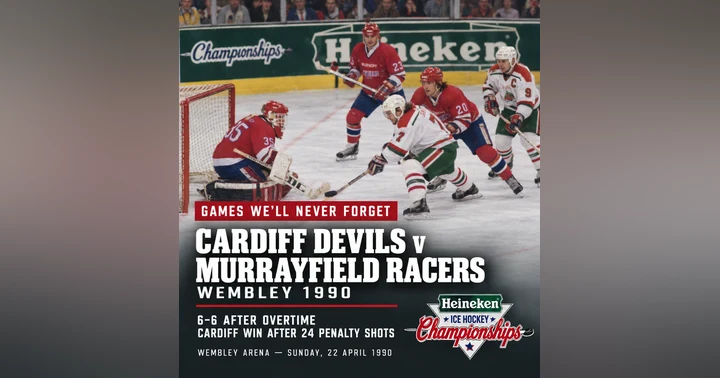
Games We’ll Never Forget: Cardiff Devils v Murrayfield Racers — Wembley 1990