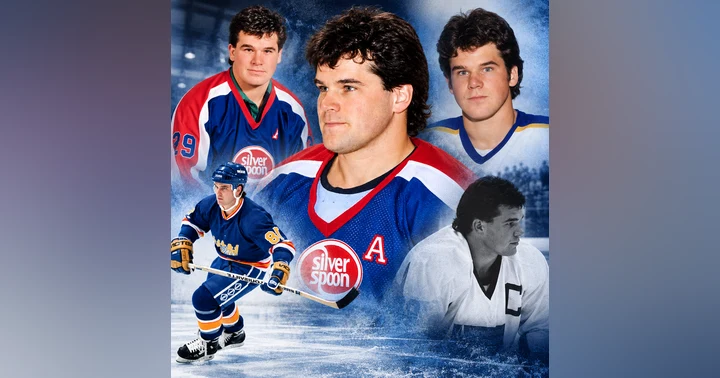
JOHN LAWLESS – THE BUILDER WHO CHANGED BRITISH ICE HOCKEY

JOHN LAWLESS – THE BUILDER WHO CHANGED BRITISH ICE HOCKEY
Peterborough. Cardiff. Manchester. Telford.
Few people have influenced the growth of British ice hockey during the 1980s and 1990s quite like John Lawless.
At just 5ft 5in, the Canadian centre hardly fitted the traditional image of an imposing hockey player. Yet what Lawless lacked in size he more than compensated for with skill, determination, an intense will to win — and, perhaps most importantly, an extraordinary ability to build hockey clubs.
He arrived in Britain in 1982 to join a brand-new Peterborough Pirates team.
Fourteen years later, after spells with Peterborough, Cardiff Devils and Manchester Storm, Lawless had helped take hockey from a converted warehouse in Peterborough to more than 17,000 spectators inside Manchester's Nynex Arena.
And along the way, he became one of the most successful player-coaches of the modern British game.
The decision that changed everything
Lawless was born in Orillia, Ontario, on 8 January 1961 and played college hockey in Canada before an opportunity arose to come to Britain.
Remarkably, his original option wasn't Peterborough.
It was Nottingham.
Speaking to Old Time Hockey UK, Lawless recalled being offered the chance to join the Nottingham Panthers for £50 a week plus accommodation.
But there was another possibility.
A brand-new club in Peterborough needed two imports and was offering just £25 a week.
Lawless chose Peterborough.
Part of the attraction was that he could travel to Britain alongside Rob Carnegie, someone he already knew, but there was something else that appealed to him: the opportunity to start at the bottom and help build something.
Looking back years later, Lawless remained convinced that he'd made the right decision.
Building the Peterborough Pirates
The Peterborough Pirates were starting virtually from scratch at the East of England Ice Rink.
And Lawless's impact was immediate.
His first season produced numbers that look almost impossible today: 100 goals and 71 assists in just 18 games.
He scored six or more goals in a game on eight occasions and once scored 21 goals across consecutive matches — 11 in one and 10 in the next.
Over his first four seasons with Peterborough, Lawless amassed an extraordinary 713 points in league and cup competition as the Pirates climbed through the British hockey structure.
But the numbers tell only part of the story.
Lawless remembers around 300 supporters attending Peterborough's first game. Local newspapers became interested, Anglia Television provided occasional coverage and the crowds grew.
By Christmas, he remembers around 1,000 people coming through the doors.
Peterborough wasn't simply winning hockey games.
A hockey club was being created.
Lawless also watched the beginnings of the local development system. Players such as Jason Porter and Grant Budd would eventually establish significant careers of their own.
Meanwhile, Lawless became involved on the management side of the operation, working as an assistant manager at the rink.
That experience was about to become extremely important.
Cardiff comes calling
Peterborough owner Dennis Adams and Sports Nationwide were involved in building the new Wales National Ice Rink.
When the time came to establish a hockey team in Cardiff, Adams turned to someone who had already experienced building a club from the ground up.
John Lawless.
He was asked to become player-manager of the new Cardiff Devils.
His answer didn't require much thought.
He jumped at the opportunity.
Cardiff presented the same challenge Lawless had loved at Peterborough — only on a considerably larger scale.
Once again, there was effectively no established local senior team from which to build.
For the Devils' early away games, Lawless remembers hiring a large van, driving the players to the game and then getting changed himself to play and manage the team.
It was British hockey at its most wonderfully uncomplicated.
Then the Wales National Ice Rink finally opened.
Around 2,500 people packed the building for Cardiff's first home game, and the Devils rewarded them with a scarcely believable 32–0 victory over Ashfield Islanders.
Something special was beginning in South Wales.
From Division Two to the top
Just as he had experienced with Peterborough, Lawless oversaw Cardiff's rapid progression through the divisions.
But he also demonstrated one of the qualities that would define his coaching and managerial career: recruitment.
One of his most important signings was Steve Moria.
Lawless had watched Moria playing for Fife and immediately recognised a player with exceptional vision, anticipation and passing ability.
To persuade him to join Cardiff, Lawless offered something unusual for British hockey at the time — a guaranteed three-year contract.
It was a huge statement.
Then came Ian and Stephen Cooper from Durham.
With strict import limits making quality British players enormously valuable, recruiting the Cooper brothers gave Cardiff another major piece of the puzzle.
Lawless understood that building a successful hockey club wasn't simply about finding the biggest names.
It was about finding the right combination of players.
Wembley 1990
By 1989–90, the newly promoted Cardiff Devils had reached the Premier Division.
Conventional wisdom suggested they might struggle.
Instead, they stunned British hockey.
Cardiff won the league championship in their first season at the highest level and reached Wembley for the British Championship Final against Murrayfield Racers.
The Devils fell 3–0 behind.
Then came an unexpected interruption when the glass came loose.
The teams returned to their dressing rooms and Stephen Cooper recognised the opportunity.
Cardiff regrouped.
They fought their way back into the game before eventually winning one of the most famous finals in British hockey history following a penalty shootout.
Even the BBC stayed with the hockey despite its coverage of the World Snooker Championship semi-finals being affected.
For Lawless, it represented something bigger than another trophy.
British ice hockey was reaching people who previously knew little about the sport.
Cardiff becomes a powerhouse
What followed established Cardiff Devils as one of the defining teams of the Heineken League era.
Under Lawless, the Devils won league championships, British Championships and the Autumn Cup.
The high point came with the 1992–93 Grand Slam, when Cardiff captured the Premier Division championship, Benson & Hedges Autumn Cup and British Championship.
Lawless was named Coach of the Year — and retained the award the following season.
Cardiff also made their mark in Europe.
Lawless particularly remembered a remarkable European weekend when the Devils defeated two teams from the former Soviet Union.
His tactics weren't complicated.
Get the puck out.
Don't allow the opposition to settle.
Frustrate them.
And when an opportunity appeared, Cardiff possessed players capable of taking it.
The strategy worked and Cardiff became the first British club to progress so far in the competition.
By now, the club Lawless had helped create from nothing had become one of Britain's major hockey powers.
More than just Cardiff
It would have been very easy for Lawless to remain in Cardiff.
Instead, in 1995, another opportunity appeared.
And appropriately enough, it appeared at Wembley.
Shortly after Cardiff had been eliminated, Lawless was walking along a corridor when an executive connected with the enormous new Manchester Arena approached him.
Manchester was looking for someone to help establish its new hockey club.
Lawless visited the arena a few weeks later.
The potential was enormous.
He had helped build Peterborough.
He had built Cardiff.
Now he could do it again — this time inside one of Europe's biggest indoor arenas.
Lawless couldn't resist.
Manchester Storm
The scale was unlike anything Lawless had previously encountered.
Manchester's first home game attracted 10,034 spectators.
Soon, five-figure crowds were becoming part of the Storm story.
Lawless again combined several jobs as player, coach and manager and assembled a team including familiar names such as Hilton Ruggles.
Manchester swept through Division One, losing only two of 52 games, and earned promotion.
Lawless himself was still contributing on the ice, scoring 19 goals in 22 league games.
His work earned him a third Coach of the Year award.
And the crowds kept coming.
A game against Blackburn Hawks attracted 16,280.
Then came the night that entered British hockey history.
17,245
On 23 February 1997, Manchester Storm faced Sheffield Steelers at the Nynex Arena.
17,245 spectators packed the building.
Thousands more reportedly couldn't get in.
Manchester won 6–2.
For someone who had begun his British career playing in front of a few hundred spectators at a converted warehouse in Peterborough, the sight must have been extraordinary.
Lawless later remembered almost having to pinch himself.
Was he really coaching ice hockey in Britain, inside a world-class arena packed with more than 17,000 people?
He was.
When the Superleague changed everything
Manchester's first Superleague season proved considerably more difficult.
Lawless had assembled his squad believing that the new competition would retain restrictions on the number of imports, with dual-national players therefore remaining particularly valuable.
Then the rules changed.
Unlimited imports were permitted.
Suddenly, the basis on which Lawless had constructed his roster was very different.
Manchester struggled.
Lawless didn't hide from what happened.
He acknowledged that he'd made mistakes and underestimated what would be required.
At the end of the season, Manchester decided to move in another direction.
His Storm adventure was over.
One final British challenge — Telford
Lawless returned to Canada and began considering life after hockey.
Then the telephone started ringing.
Telford wanted him.
Initially, Lawless wasn't interested.
He knew the club's history and had reservations about its financial position.
Telford kept calling.
Lawless kept saying no.
Eventually, he told them what it would take: match what he'd been earning at Manchester.
To his surprise, they agreed.
Lawless still loved hockey and realised he wasn't quite ready to walk away.
So he returned to Britain.
He joined the Tigers during the 1997–98 campaign and helped take Telford to runners-up spot in the British National League.
But his concerns about the finances proved justified.
Lawless had wisely negotiated half of his money up front, yet he recalled that it still took around another year after leaving before he received everything he was owed.
It was an unfortunate final chapter to an otherwise remarkable British club career.
Great Britain
Lawless's contribution wasn't confined to club hockey.
After acquiring British nationality, he represented Great Britain during the 1990 and 1991 World Championship campaigns.
He won 12 GB caps, recording 15 points — five goals and ten assists.
In 1990 he scored four times as Great Britain earned promotion into Pool C.
1,471 points
The final playing numbers underline just how extraordinary Lawless's career was.
The British Ice Hockey Hall of Fame records:
434 games
666 goals
792 assists
1,471 points
Yet statistics alone don't adequately explain his impact.
He was a player.
A coach.
A manager.
A recruiter.
A promoter.
And above all, a builder.
The Lawless legacy
John Lawless was inducted into the British Ice Hockey Hall of Fame in 1997.
His No. 9 jersey has also been retired by the Cardiff Devils.
But perhaps his greatest legacy can be traced through the clubs themselves.
At Peterborough, he helped take a new club from the lower reaches of British hockey to the Premier Division.
At Cardiff, he helped create a club from scratch and transformed it into one of the dominant forces of the Heineken League era.
At Manchester, he helped demonstrate that British ice hockey could attract crowds previously considered almost unimaginable.
And at Telford, even with the financial problems surrounding the club, he once again produced results.
There is a wonderful consistency running through the whole story.
From Peterborough to Cardiff and Manchester, Lawless repeatedly accepted the same challenge:
Start with something new. Build it. Promote it. Fill the building. And win hockey games.
For a man who stood just 5ft 5in tall, John Lawless left an enormous footprint on British ice hockey.
🎙️ RELATED LISTENING — JOHN LAWLESS
Hear John Lawless tell the story himself in his original Old Time Hockey UK Podcast interview.
John talks about turning down Nottingham to join the brand-new Peterborough Pirates, building the Cardiff Devils, Wembley, European hockey, the extraordinary rise of Manchester Storm, the arrival of the Superleague and his final British chapter with Telford Tigers.
Listen to John Lawless on the Old Time Hockey UK Podcast

Richard Little – The Durham Wasps Scoring Machine Who Made Britain Home