Rob Breskal: A Legend of British Ice Hockey
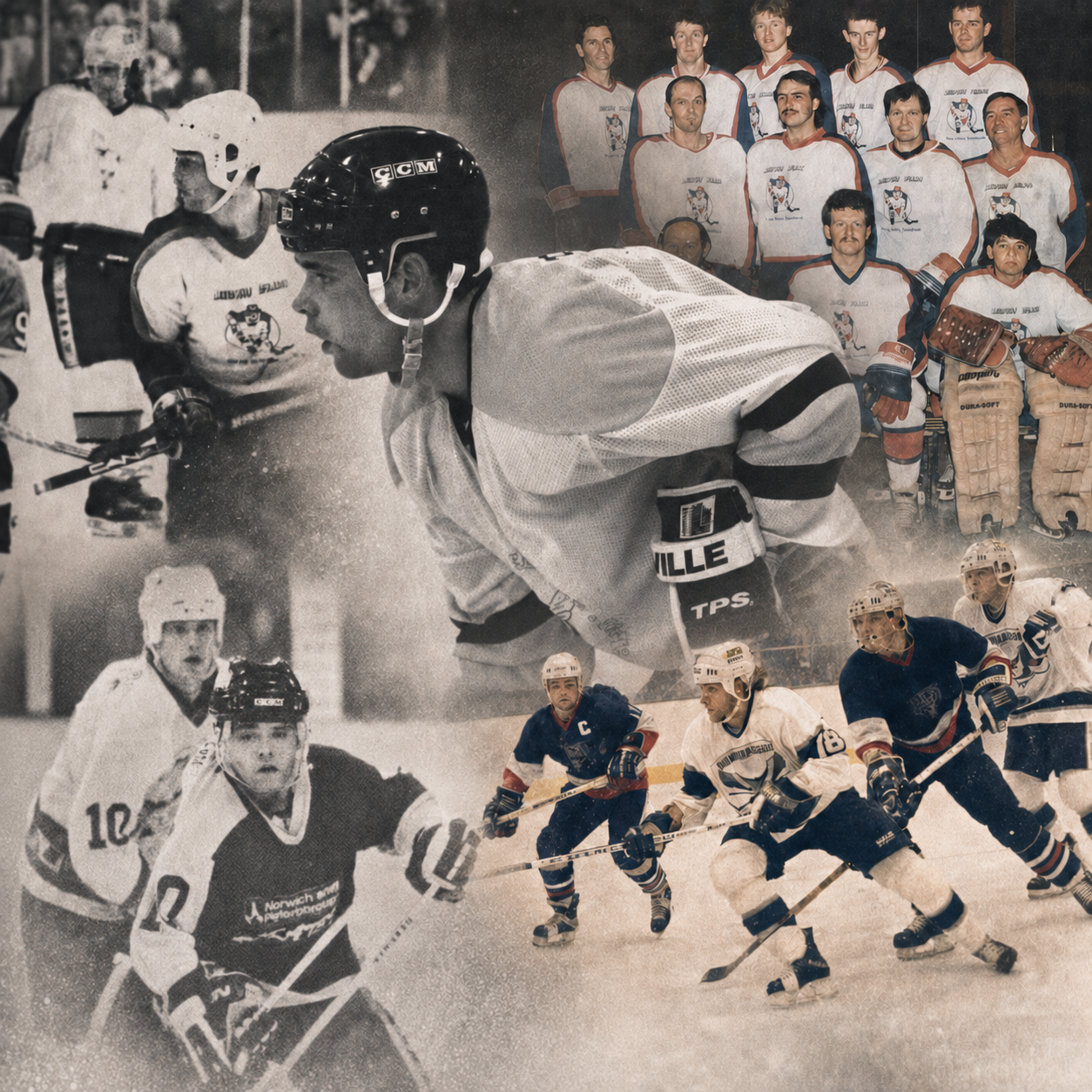
Legends of the Game: Rob Breskal
From a tiny rink in Brighton to representing Great Britain, lifting the Scottish Cup and captaining two of British hockey’s best-remembered clubs, Rob Breskal’s career is a story of determination, opportunity and an enduring love of the game.
Born on 7 September 1966, Breskal played both forward and defence during a career which included the Brighton Royals, Southampton Vikings, Dundee Rockets, Medway Bears and Bracknell Bees. Yet his introduction to hockey came about almost entirely by chance.
Discovering the game in Brighton
Breskal was raised in Brighton, a town with a proud hockey history but no full-sized ice rink during his childhood. His first encounter with the sport came when he accompanied his mother to collect her Mini from a local garage.
Hanging at the back of the garage were several hockey sticks. The young Breskal asked what they were and learned that the garage’s owner played roller hockey. Already interested in roller skating, he was invited to a late-night session at Tideway School.
It was there that Breskal encountered former Brighton Tigers players and began developing his own game. Another chance meeting followed at Brighton’s tiny city-centre rink, where the Streatham junior team was temporarily training while its home rink underwent refurbishment.
Breskal asked if he could join in. Once he had obtained his mother’s permission, he began training with the Streatham Braves and later played for the Braves and Scorpions.
When hockey returned to Brighton in the form of the Brighton Royals and Tiger Cubs, he finally had teams representing his hometown. With no suitable home rink, Brighton played its fixtures away, sometimes taking to the ice as late as 11.30 at night.
As a teenager, Breskal regularly played two periods for the junior side before changing shirts and playing another three for the senior team. During one season, aged just 16, he scored a combined 100 goals.
Southampton and Great Britain
His performances attracted the attention of the Southampton Vikings. Following a trial overseen by Bruce and Brian Simms, the 16-year-old Breskal was offered equipment, travelling expenses and £20 a week.
Still attending school, he travelled to Southampton for training and spent his weekends playing across Britain. On Monday mornings, he would return directly to school, where special permission allowed him to arrive late.
Southampton won the league during his season with the club, but an even greater honour soon followed.
At 17, Breskal was selected to represent Great Britain at the 1984 European Junior Championships in Edinburgh. Although naturally a forward, he was used in defence alongside a talented group which included Stephen Cooper, Johnny Airedale, Ian Cooper and Tony Hand.
Great Britain came agonisingly close to winning the tournament, eventually finishing behind Hungary and collecting the silver medal. Breskal later represented England and appeared in further Great Britain exhibition games.
A telegram from Dundee
In 1985, Breskal was working as a civil servant when an unexpected telegram arrived instructing him to report for training with the Dundee Rockets.
Within days, the 19-year-old had left his job, family and life in Brighton to move more than 500 miles north. It was a considerable culture shock, but one which gave him the opportunity to join one of Britain’s leading teams.
The Rockets’ roster included Gary Unger, Lewis Côté, Ali and Ronnie Wood, Rocky Saganiuk and a young Martin McKay. Competing for ice time among players of that calibre became an invaluable learning experience.
Dundee finished fourth in the league and defeated champions Durham Wasps 5–4 in the Wembley play-off semi-final. Although the Rockets lost the final 4–2 to Fife Flyers, the season still ended with silverware when Dundee beat Murrayfield Racers to win the Regal Scottish Cup.
For Breskal, the victory carried additional significance: he understood himself to be the only English recipient of a Scottish Cup winner’s medal at that time. It was also his final appearance for the Rockets. Despite being invited to return, homesickness drew him back south.
Captain of the Medway Bears
Breskal joined the newly promoted Medway Bears and was made captain during his first season, despite being only around 20 years old.
He may not have considered himself the most gifted member of the team, but he possessed the quality upon which his career was built: he never stopped competing.
“If we were down ten goals, I didn’t care,” he recalled. “I’d still keep hammering and still keep trying.”
That commitment, combined with his enthusiasm and larger-than-life personality, made him a natural leader. Across two spells, Breskal spent approximately seven and a half seasons with Medway and captained the Bears for four of them.
The club held a special place in his heart. Its rink could produce an intimidating atmosphere, particularly during the Bears’ fiercely contested meetings with teams such as Telford. Breskal also developed a close relationship with the Medway supporters, who recognised his wholehearted approach to every game.
During one later season, after being moved back to his natural forward position, he became the team’s leading British scorer with more than 70 points.
Success with the Bracknell Bees
Breskal had no intention of leaving Medway when Bracknell coach Grant Clark first approached him. He was happy with the Bears and initially rejected the opportunity.
Clark, however, travelled to Brighton to make his case over dinner. When Bracknell offered to double Breskal’s wages, the proposed move became considerably more difficult to refuse.
Bracknell was an ambitious and professionally run club. Breskal was again selected as captain, this time following a vote among the players.
During his first season, the Bees finished third before winning their play-off group and securing promotion to the Premier Division. Breskal remembers the packed rinks, queues outside the buildings and fiercely intense contests against Cardiff, Telford and Humberside.
After three seasons at Bracknell, he returned to Medway and enjoyed a new lease of life with the Bears.
More than wins and medals
Breskal’s career brought international honours, trophies, captaincies and countless memorable games. Nevertheless, when asked what he missed most after retiring, his answer was not scoring goals or playing in front of packed crowds.
It was the camaraderie.
Hockey gave him teammates who supported one another and friendships capable of surviving decades. Social media later reunited players who had once battled fiercely on the ice, while the 100 Years of UK Ice Hockey celebration in Durham offered the chance to meet them again in person.
In 2015, Breskal travelled from his home in New South Wales, Australia, to attend that reunion. His visit lasted only a couple of nights, but the journey covered more than 10,000 miles.
Shortly after returning to Australia, an apparently minor bout of “indigestion” led doctors to discover a life-threatening blockage in his heart. Despite several earlier tests producing reassuring results, an angiogram revealed the seriousness of the problem and Breskal underwent double bypass surgery.
His experience left him with a simple but important message: if something does not feel right, get it checked.
Today, Breskal lives in Port Macquarie, New South Wales. The nearest ice rinks are around two hours away, but hockey — and the people he met through it — remains an important part of his life.
Rob Breskal’s playing days were defined by commitment, leadership and an absolute refusal to quit. From the Brighton Tiger Cubs to Great Britain, and from Dundee’s Scottish Cup triumph to his captaincies at Medway and Bracknell, he earned his place among the Legends of the Game.
🎙️ Related Listening
Hear from Rob Breskal’s former Dundee Rockets teammate Garry Unger as he looks back on his career and his time in the NHL and British ice hockey.
👉 Garry Unger Podcast Interview — Listen Here

Ken Abbott is the creator and host of Old Time Hockey UK, celebrating the players, teams, rinks and unforgettable moments from British ice hockey’s golden years.
A Nottingham Panthers supporter since the early 1980s, Ken has been involved with British hockey for more than four decades, including over 20 years in the hockey retail business.
He launched the Old Time Hockey UK podcast in 2014, interviewing many of the players, coaches and personalities who helped shape the British game. Today, Old Time Hockey UK brings together those podcast conversations with archive stories, classic games, legendary players and memories from the rinks we still miss.
Durham Wasps v Peterborough Pirates – Wembley 1991: The Grand Slam Final