Murrayfield Ice Rink – Where Scottish Hockey Legends Were Made
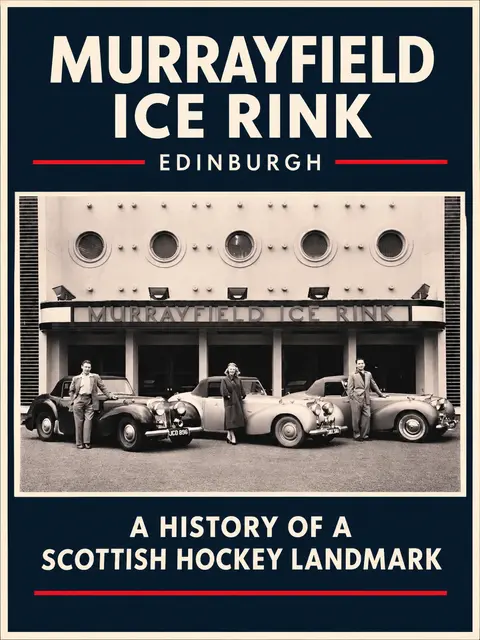
Rinks We Remember
The wooden seats. The freezing air. The roar of the crowd. And a building that has witnessed generations of Scottish ice hockey history.
There are certain British ice rinks that have a character all of their own.
Buildings where the history seems to live in the walls, where generations of supporters have occupied the same seats, and where the memories of great players, famous victories and bitter rivalries never quite disappear.
Murrayfield Ice Rink in Edinburgh is undoubtedly one of them.
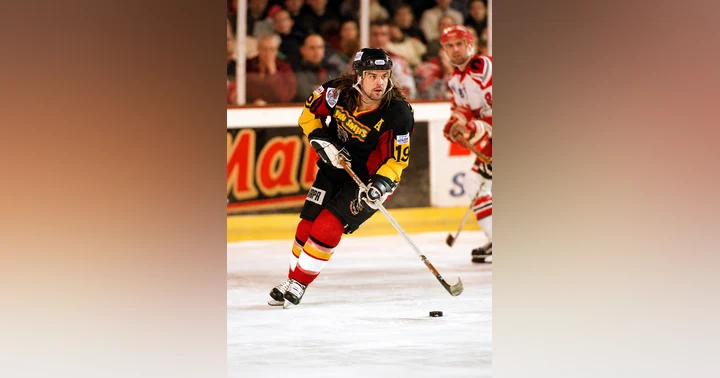
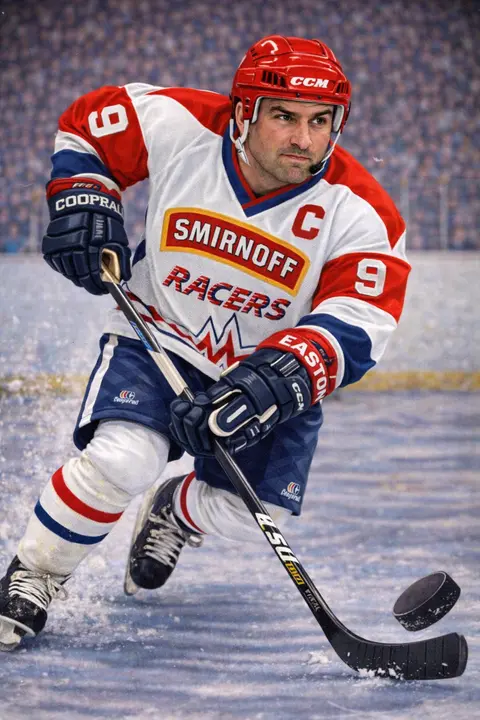
For supporters who followed British ice hockey during the Heineken League years, Murrayfield was one of the great away destinations. It was the home of the Murrayfield Racers, a club whose name became synonymous with Scottish hockey success.
But the story of this remarkable venue began long before the Racers were lifting trophies and entertaining packed crowds.
In fact, it began with a building that was completed just as Britain was preparing for war.
1938–1939: A Grand Vision Interrupted by War
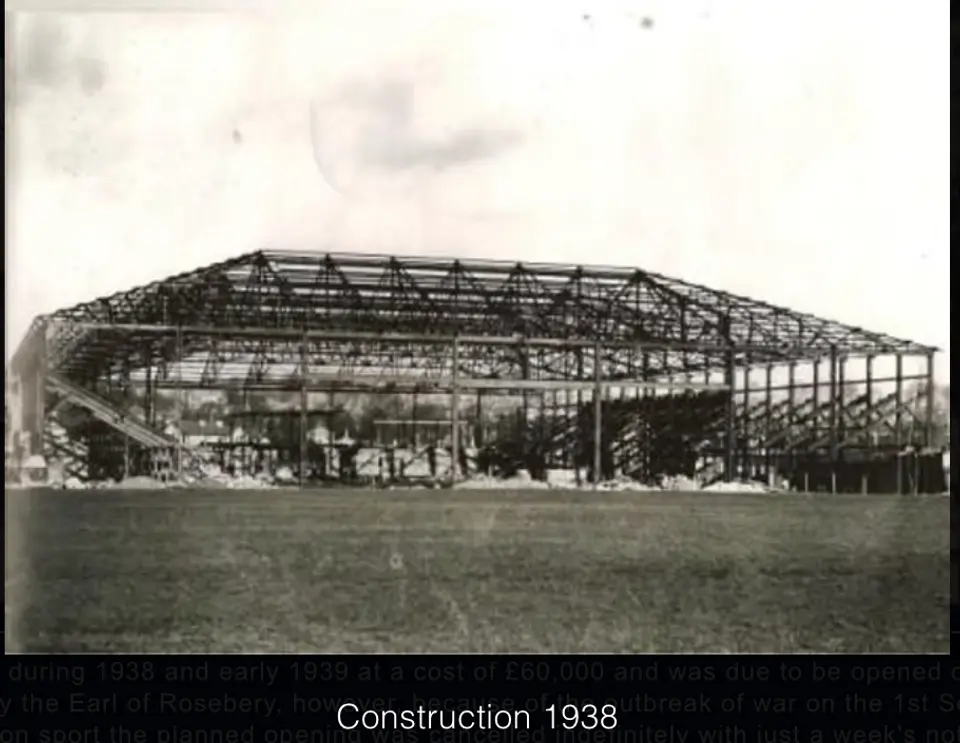
Murrayfield Ice Rink under construction in 1938.
During the 1930s, Britain experienced a boom in the construction of indoor ice rinks. Ice skating was becoming increasingly popular, and purpose-built arenas were appearing in towns and cities across the country. Edinburgh was to have one of the finest.
Construction of Murrayfield Ice Rink began in 1938, with the impressive Art Deco building designed by architects J. B. Dunn and G. L. Martin. Built at a reported cost of £60,000, the rink was intended to provide a modern home for skating, ice hockey and spectacular ice shows.
By 1939, the building was virtually ready.
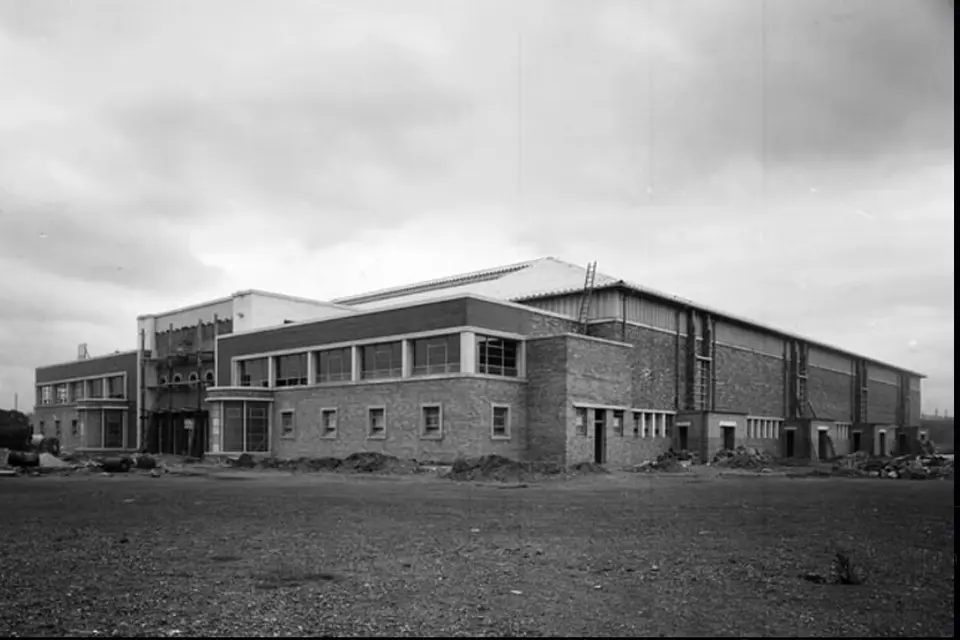
Murrayfield Ice Rink nearing completion in 1939, before the outbreak of the Second World War.
An official opening ceremony had been planned for 15 September, with the Earl of Rosebery due to perform the honours. Celebrated skaters Freddie Tomlins and Daphne Walker were expected to appear, but the outbreak of the Second World War changed everything.
The opening was cancelled, and the government requisitioned the building for military purposes. Instead of welcoming thousands of spectators, Murrayfield became a Royal Army Service Corps depot and, after the war, continued in government use as a stationery store.
For almost thirteen years, Edinburgh's magnificent new ice rink stood without fulfilling the purpose for which it had been built.
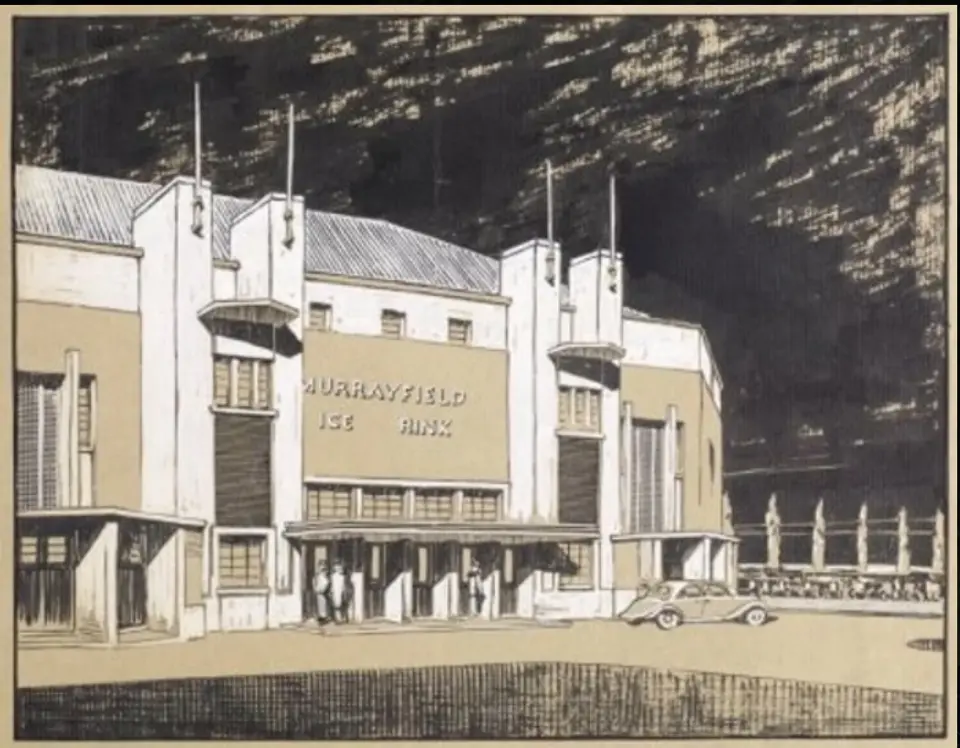
An early illustration of Murrayfield Ice Rink, showing the distinctive entrance and architectural design.
August 1952: Murrayfield Finally Opens
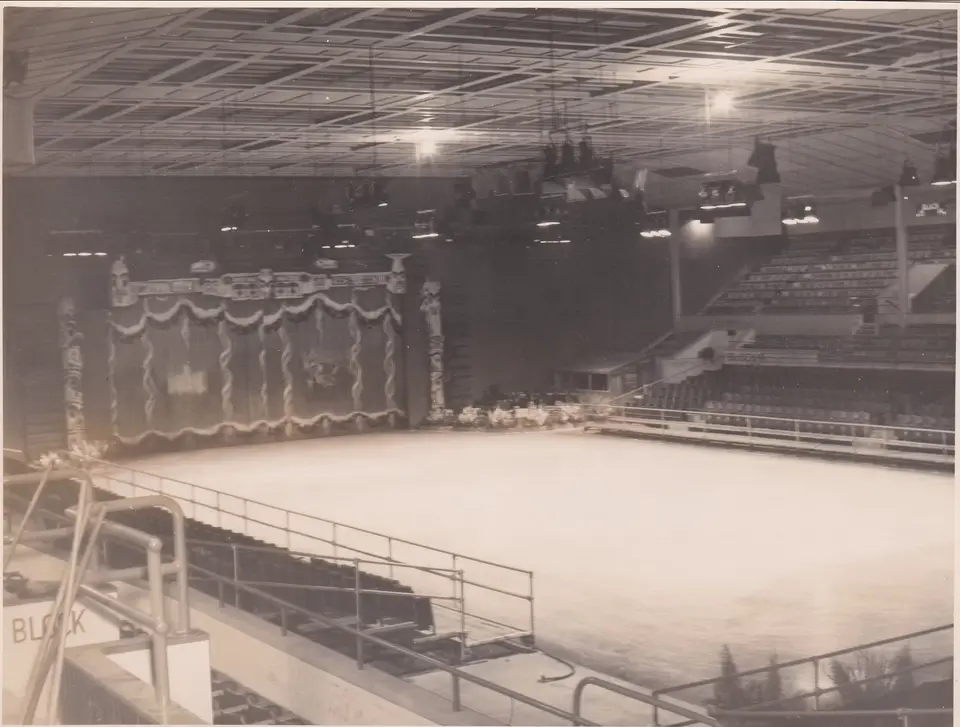
Murrayfield Ice Rink prepared for an ice show in its early years.
The long wait finally ended in August 1952. Following alterations to the building, Murrayfield Ice Rink opened to the public, with Edinburgh's Lord Provost, Sir James Miller, conducting the official ceremony.
On Thursday 7 August, more than 4,000 spectators attended a performance of the ice spectacular Rose Marie on Ice. After years of delay, the people of Edinburgh finally had their ice arena, and contemporary reports celebrated the venue as Scotland's most modern ice rink.
It quickly became an important part of the city's sporting and social life. Public skating proved particularly popular, with Friday and Saturday evening sessions sometimes attracting around 1,000 skaters. The rink also hosted professional ice shows, figure skating exhibitions, boxing, basketball and, of course, ice hockey.
For many Edinburgh families, Murrayfield became a regular weekend destination. More than simply a place to skate, it was somewhere to meet friends, enjoy an evening's entertainment and create lasting memories.
And the rink was about to establish a sporting tradition that would continue for generations.
The Murrayfield Royals – The Early Hockey Years
The Murrayfield Royals brought professional ice hockey to the new arena in 1952, helping to establish the sport in a city that would eventually produce some of Britain's finest hockey talent.
However, these were difficult years for professional ice hockey in Britain. Despite the initial enthusiasm, the expense of staging major events and maintaining a large ice arena became increasingly challenging. In June 1956, the company operating Murrayfield entered voluntary liquidation, leaving the future of the building uncertain.
Fortunately, in March 1957, four Edinburgh businessmen purchased the rink and set about rebuilding its fortunes. Professional ice hockey returned, alongside skating, ice dance and other activities, ensuring that Murrayfield remained an important part of the city's sporting life.
By the early 1960s, however, the professional game in Britain had declined significantly. Ice hockey entered a largely amateur period, with clubs increasingly relying on local players and junior development rather than established professional teams.
At Murrayfield, this changing landscape would eventually help create the foundations of one of Britain's most successful hockey clubs.
1966: The Murrayfield Racers Arrive
In 1966, a new chapter in Murrayfield's ice hockey history began with the formation of the Murrayfield Racers. The club would go on to become one of the most recognisable names in British ice hockey, establishing a tradition that would bring generations of supporters through the rink's doors.
The Racers helped keep ice hockey at the heart of Murrayfield during a period when the British game was undergoing significant change. As the sport developed through the 1970s and into the 1980s, the Edinburgh club built a reputation for competitive hockey, passionate supporters and a distinctive home-ice atmosphere.
For visiting teams, Murrayfield became a familiar and often challenging destination. The traditional wooden seating, the proximity of spectators to the ice and the noise generated inside the old building gave the venue a character that modern arenas have struggled to reproduce.
By the time the Heineken League era arrived, Murrayfield was firmly established as one of the great names in British ice hockey. The Racers would become an important part of that era, helping create memories that supporters still talk about decades later.
The Heineken League Years – Saturday Nights at Murrayfield
For many Old Time Hockey UK followers, this is the Murrayfield they remember best.
The 1980s and early 1990s were extraordinary years for British ice hockey. The Heineken League brought together some of the country's most recognisable clubs, with fierce rivalries, talented imports and increasingly competitive hockey. And Murrayfield was right at the heart of it.
The Racers developed into a formidable force, producing championship-winning teams and memorable performances. The names of Tony Hand, Rick Fera, Chris Kelland, Brian McKee and many others became familiar throughout British ice hockey.
One of the Racers' most unforgettable appearances came in the extraordinary 1990 Wembley Championship Final against Cardiff Devils, a game that remains part of British hockey folklore.
But the rink itself was just as important to the experience.
Those who remember the old British arenas will understand. The wooden seats, the cold air, the noise of the crowd and the feeling that everyone was close to the action. There was no mistaking where you were.
Murrayfield had its own atmosphere. Visiting teams knew they faced a difficult evening, while travelling supporters experienced a venue steeped in hockey tradition. Every hard check, controversial decision and important goal could bring an immediate reaction from the stands.
For Racers supporters, these were special years. For opposition fans, Murrayfield was one of those away rinks that stayed in the memory long after the journey home.
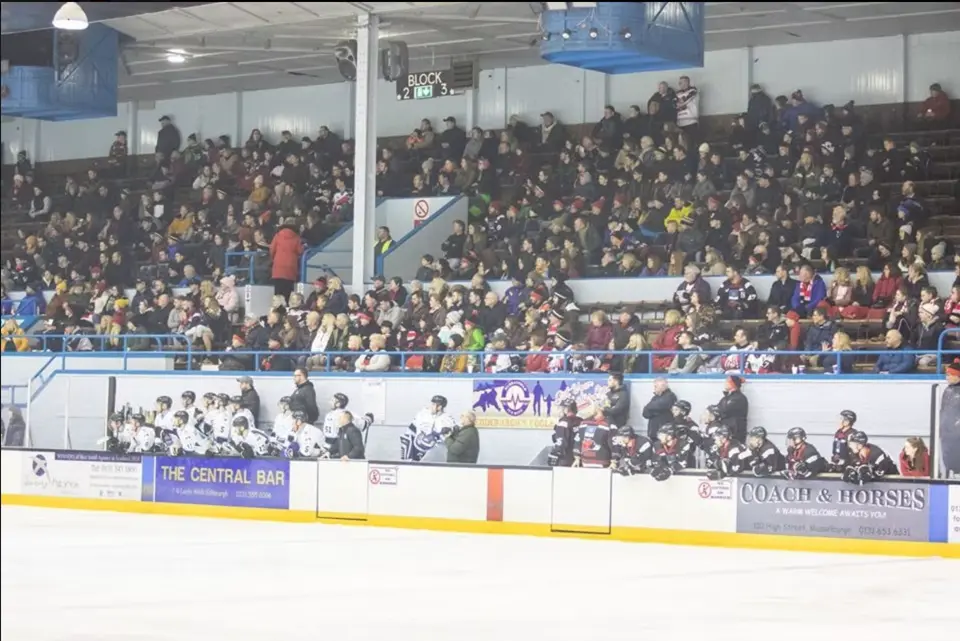
A night of ice hockey at Murrayfield, with the stands packed with supporters.
A Rink That Helped Produce Tony Hand
Perhaps no player better represents Murrayfield's contribution to British ice hockey than Tony Hand.
Born in Edinburgh, Hand developed through the Murrayfield junior system before emerging as one of the most gifted players the British game has ever produced. His exceptional passing, vision and scoring ability made him a remarkable talent.
In 1986, Tony Hand made British ice hockey history when the Edmonton Oilers selected him in the 12th round of the NHL Entry Draft, making him the first British-born and British-trained player to be drafted into the NHL. It was an extraordinary achievement for someone who had learned his hockey in Edinburgh.
Hand went on to enjoy a remarkable playing and coaching career, becoming one of the most recognisable figures in British ice hockey history. Yet his story will always be closely connected with Murrayfield.
The rink was where his journey began.
And for generations of young Scottish players, his achievements demonstrated what might be possible.
Former Murrayfield Racers forward Jim Mollard shared his memories of joining the Edinburgh club in an Old Time Hockey UK podcast interview.
More Than Hockey – A Sporting Landmark
Although ice hockey became one of Murrayfield's defining attractions, the rink has hosted an extraordinary variety of sporting and entertainment events.
In July 1970, Edinburgh staged the British Commonwealth Games, with Murrayfield Ice Rink selected as the venue for the boxing competition. Among the competitors was a young John Conteh, who won the middleweight gold medal for England. Scotland's Tom Imrie also enjoyed success, winning the light-middleweight title.
The rink subsequently hosted the closing ceremony of the Games.
Over the decades, Murrayfield also welcomed major figure skating events, ice shows and other forms of entertainment. The adjacent curling facility added another dimension to the site's sporting importance.
For Edinburgh residents, Murrayfield was never exclusively about ice hockey. It was somewhere people learned to skate, enjoyed family outings, attended special events and created memories that lasted a lifetime.
The Old Wooden Seats – Part of Murrayfield's Character
Modern sporting arenas offer comfortable seating, extensive hospitality facilities and all manner of entertainment. But for many supporters, there is something about the traditional British ice rink that cannot easily be replaced.
Murrayfield's wooden seating is one of its most recognisable features. Row after row of seats overlooking the ice, with supporters returning to familiar places year after year, provides a connection with generations of Scottish hockey history.
The building's age is part of its appeal. Its Art Deco architecture, traditional interior and distinctive atmosphere all contribute to a venue where you can imagine generations of hockey supporters sitting in exactly the same places, watching their teams battle it out on the ice.
Different teams, different players and different eras — but the same rink.
For many supporters, that sense of continuity is priceless.
Changing Times – From Racers to Capitals
British ice hockey underwent enormous changes during the 1990s. New leagues, rising costs and changing club structures transformed the game, and Murrayfield experienced its own changes.
The original Racers era ended during the mid-1990s, with the Edinburgh Racers and Murrayfield Royals names appearing during the transitional years. In 1998, the Edinburgh Capitals began a new chapter at the rink.
For the next two decades, the Capitals became closely associated with Murrayfield, introducing another generation of supporters to ice hockey in Edinburgh. The Racers name would later return for a period, before the Capitals themselves returned to competitive action for the 2022–23 season.
The history of hockey at Murrayfield has therefore been anything but straightforward. Clubs have changed, leagues have come and gone, and the sport has faced considerable challenges.
But the building has remained a constant presence.
Murrayfield Today – The History Is Still There
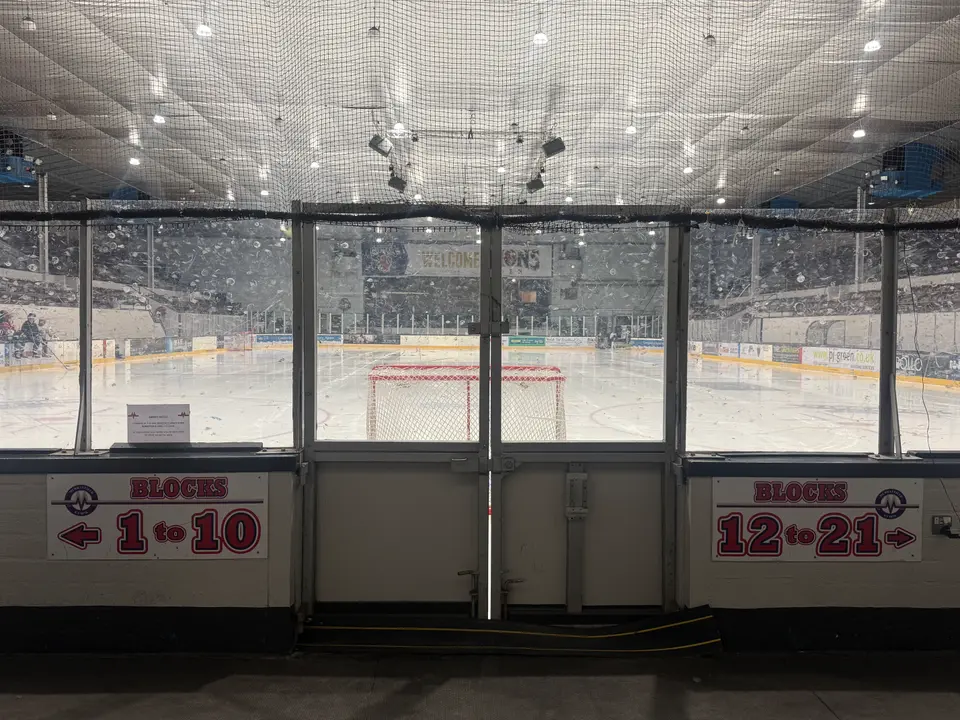
Rinkside access doors and spectator block signs at Murrayfield Ice Rink. Photo: Mark Easton, November 2026.
Murrayfield Today – The History Is Still There
In November 2026, Murrayfield Ice Rink remains one of the most distinctive venues in British ice hockey. And thanks to a remarkable collection of photographs taken on 12 November by Mark Easton, the current Edinburgh Capitals media officer, we can see just how much of its traditional character survives.
The familiar wooden seating still overlooks the ice, and the old arena layout remains instantly recognisable. The scoreboard, the rinkside boards, the entrances and the view from the stands all connect the modern venue with its long history.
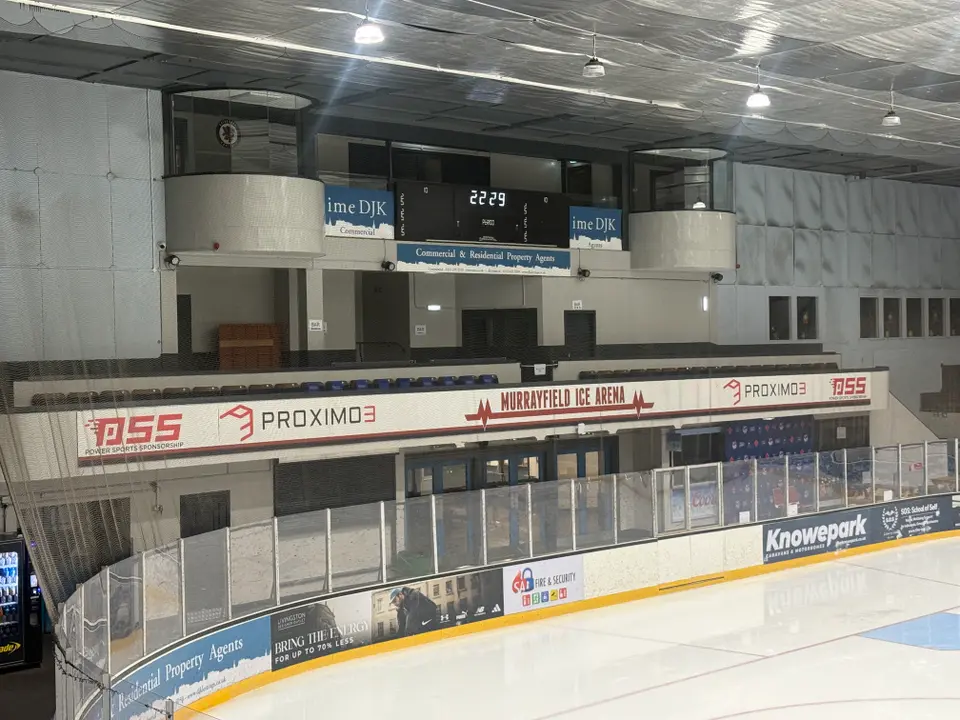
The scoreboard and elevated viewing areas overlooking the ice at Murrayfield. Photograph: Mark Easton, November 2026.
From the traditional spectator seating to the familiar views across the ice, Murrayfield retains much of the character that generations of supporters remember. The old arena layout, the close proximity to the action and the unmistakable surroundings provide a tangible connection between the rink's past and present.
These photographs are a reminder that Murrayfield is not simply a building from British hockey's past. It is a living part of the sport's history.
Unlike so many of the old arenas that have disappeared, Murrayfield remains a place where people can experience ice hockey in surroundings that have welcomed generations before them.
That is something worth celebrating.
A Rare Survivor of Britain's Ice Rink Heritage
In 2013, Murrayfield Ice Rink was designated a Category B listed building, recognising its architectural and historical importance. It is one of the rare surviving examples of the purpose-built ice arenas constructed during Britain's great skating boom of the 1930s.
Many other venues from that period have disappeared. Some were demolished, while others were replaced by modern leisure developments. Many of those lost venues are remembered in our Rinks We Remember collection, which celebrates the historic ice rinks that helped shape British ice hockey.
Murrayfield's survival provides a valuable physical connection with an earlier sporting age.
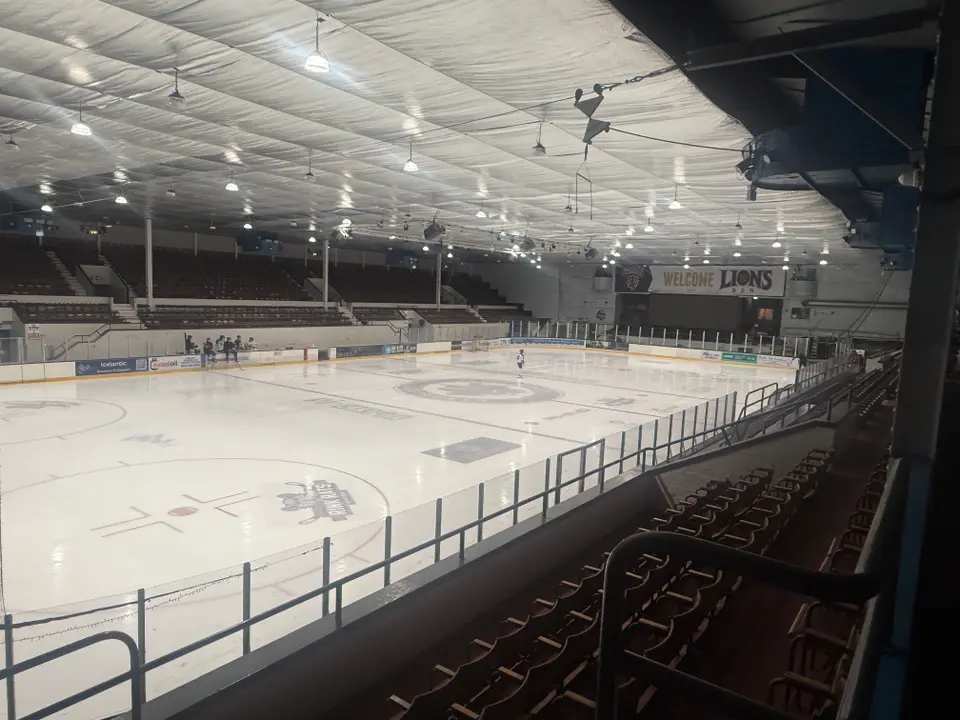
Murrayfield's traditional wooden seating and familiar rink interior. Photo: Mark Easton, November 2026.
For supporters who remember the Heineken League years, it also offers something increasingly rare: the chance to return to a building that still feels familiar.
A place where memories of the past are never very far away.
Murrayfield – Where the Memories Live On
From its construction in 1938 to its delayed opening in 1952, Murrayfield Ice Rink has enjoyed an extraordinary history. It survived the Second World War, financial uncertainty, changing sporting fashions and the many transformations of British ice hockey.
It has welcomed the Royals, the Racers and the Capitals.
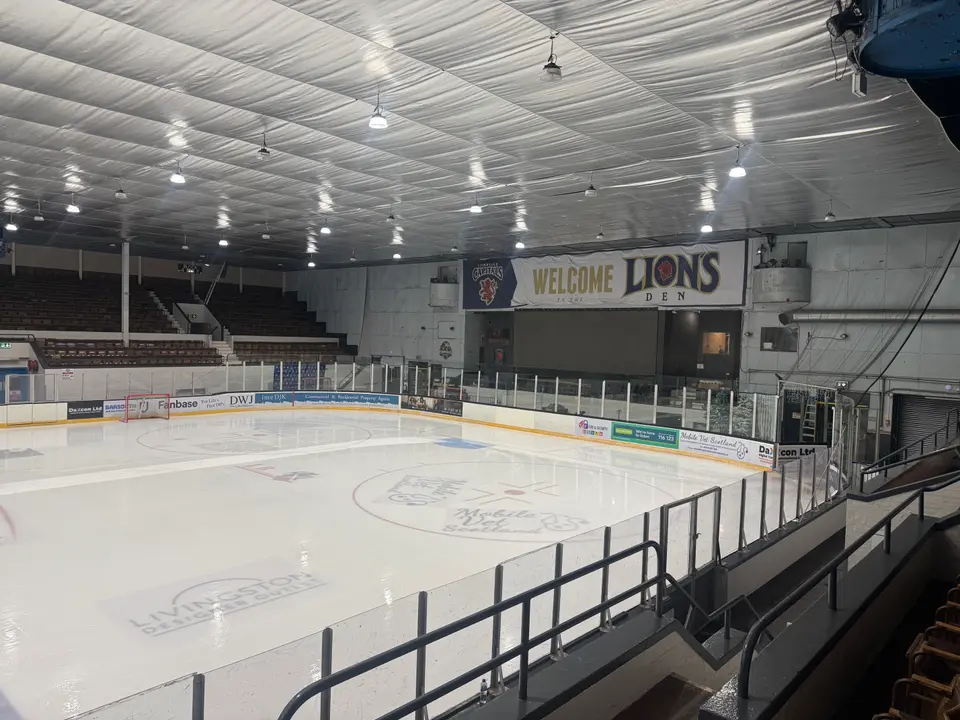
The Lions Den – Murrayfield Ice Rink, November 2026. Photo: Mark Easton.
It has hosted Commonwealth Games boxing, spectacular ice shows, figure skating champions and countless hockey matches. And it helped nurture one of the greatest players British ice hockey has ever produced.
But perhaps its greatest legacy lies in the memories of the people who have passed through its doors.
The supporters who watched the Racers during the Heineken years.
The families who attended their first hockey match.
The youngsters who learned to skate on its ice.
The visiting fans who made the long journey to Edinburgh.
And the generations who have called Murrayfield their hockey home.
Because the true history of a rink isn't measured only in years, trophies or famous names. It's measured in the memories of the people who were there.
Murrayfield Ice Rink has given British ice hockey supporters more than eight decades of history, and over seven decades of skating and hockey memories.
And thankfully, the story continues.
Over to You – Your Murrayfield Memories
Whether you were a Murrayfield regular, a visiting supporter or someone who experienced the rink for the first time, we'd love to hear your memories.
Who was the greatest player you ever saw at Murrayfield?
What was the most memorable game you attended?
And what is the one thing about the rink that you will never forget?
Share your memories, photographs and stories with Old Time Hockey UK.
Reliving British Hockey's Golden Years.
Photographic acknowledgement
Special thanks to Mark Easton, Edinburgh Capitals Media, for providing contemporary photographs of Murrayfield Ice Rink taken on 12 November 2026.
Further reading

Ken Abbott is the creator and host of Old Time Hockey UK, celebrating the players, teams, rinks and unforgettable moments from British ice hockey’s golden years.
A Nottingham Panthers supporter since the early 1980s, Ken has been involved with British hockey for more than four decades, including over 20 years in the hockey retail business.
He launched the Old Time Hockey UK podcast in 2014, interviewing many of the players, coaches and personalities who helped shape the British game. Today, Old Time Hockey UK brings together those podcast conversations with archive stories, classic games, legendary players and memories from the rinks we still miss.
Paul Heavey – From Crossmyloof to Cardiff Glory